Chinese drums come in more shapes than most buyers expect. There is the drum that leads a lion dance, the drum that answers a punchline, and the drum a four-year-old taps before nap time. Same workshop, eleven different jobs. This guide walks through each type — what it looks like, what it sounds like, and who picks it up — so you can match the drum to your program before you ask for a quote.
The Lineup at a Glance
| Type | Sizes | The voice | Who picks it |
|---|---|---|---|
| Lion dance & dragon | 12–24 in | Loud, double-headed | Kung fu schools, parade troupes |
| Tanggu | 7 in – 2 m | The all-rounder | Opera, temples, schools |
| War & flat | 10–16 in | Projecting, full-grain | Orchestras, drum lines |
| Waist (yaogu) | 9–15 cm | Marching hip drum | Folk dance troupes |
| Chest (xionggu) | 12–14 cm | Quick procession answers | Parade teams |
| Kids early-learning | 3–14 in | First drum | Classrooms, families |
| Storytelling (shugu) | 26 cm | Speech-fast flat drum | Teahouse storytellers |
| Flower pot (huapen) | 16–18 in | Deep low voice | Orchestras |
| Fan (reba) | 20–45 cm | Hand-held showpiece | Dance and ritual troupes |
| Sanjuban set | 6–10 in | Comedy timing kit | Schools, street acts |
| Team building (tongxin) | 32–40 cm | Pull-together game | Corporate events, camps |
The Drums, One by One
1Lion Dance and Dragon Drums
Start with the loudest. Lion dance drums are deep-barreled and skinned on both faces, built to cut through cymbals and a street crowd. Sizes run from a 16-inch practice drum for kung fu students up to a 24-inch parade drum that two players hammer for a full route. Shells take paint, so teams order their own colors and dragon artwork. If you run a martial arts school or a parade troupe, this is your first call — the full range sits on the lion dance and dragon drums page.
2Tanggu Drums
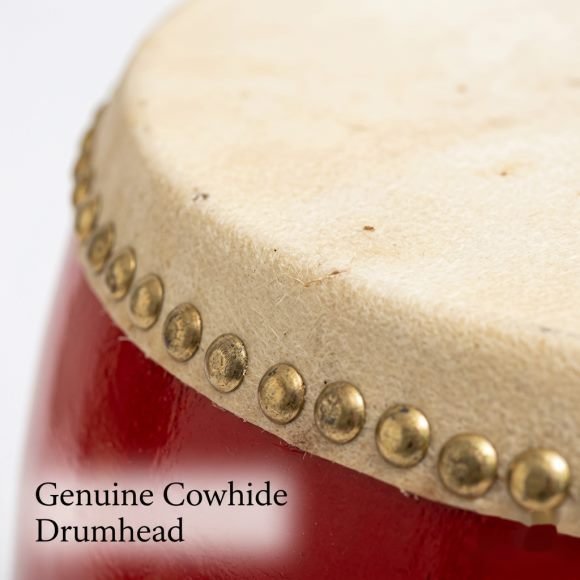
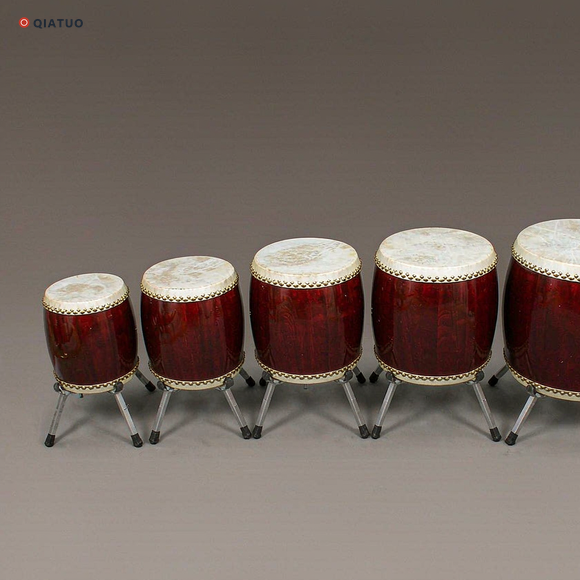
The tanggu is the all-rounder of the family. One red barrel, one buffalo-hide head, and a size ladder that runs from a 7-inch practice drum to a two-meter ceremonial giant. Small tanggu answer an opera singer line by line; big ones carry a ceremony on their own. Most ship on a wheeled stand so a single player can move them between rooms. Schools, opera groups and temples all land here sooner or later — the ladder is laid out on the tanggu drums page.
3War and Flat Drums
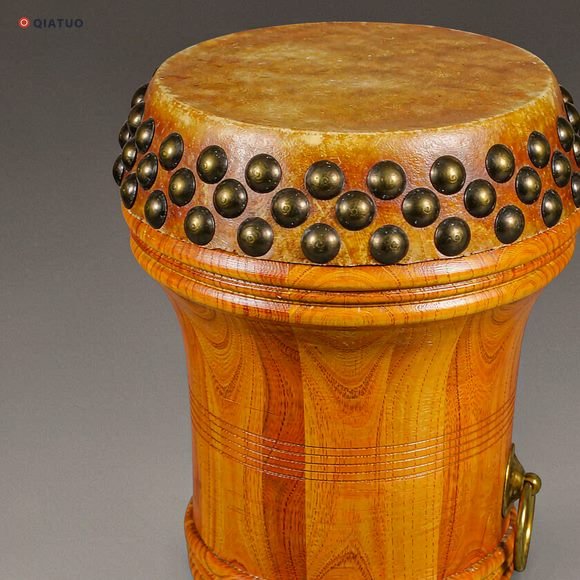
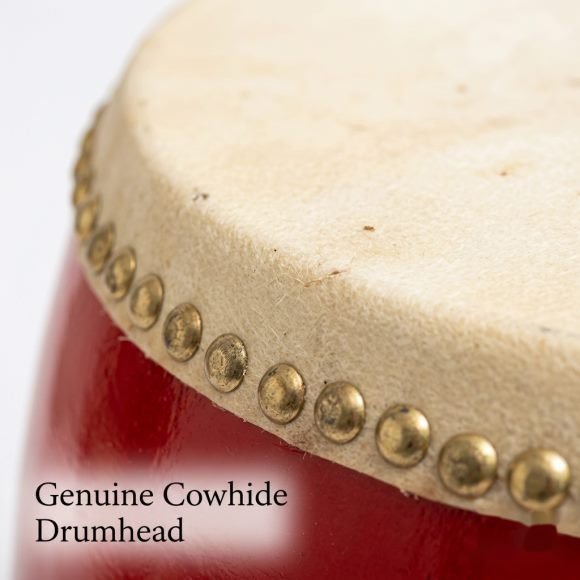
War drums look like tanggu at a glance. The difference is in the head and the voice: full-grain yellow cowhide on a toon-wood shell, tuned to project across an orchestra or a student drum line. Flat drums trade depth for a drier, tighter slap. Both come with matching stands, and both get bought by ensembles that already own the gongs and want a drum section to answer them. The war and flat drums page sorts the sizes out.
4Waist Drums (Yaogu)
Tie this one on and walk. The yaogu is an hourglass drum slung at the hip, played with short sticks and sashes by dancers who never stand still. Nine centimeters suits a child in a school yard; twelve to fifteen carries an adult folk dance troupe through a full routine. The PVC shell shrugs off rain and knocks, which is why festival teams reorder them season after season. Age-by-size mapping lives on the waist drums page.
5Chest Drums (Xionggu)
The chest drum is the small one with the big job. Shaped like a goblet and played at the chest or slung at the side, it marks steps in a procession and answers the gong in a parade. Twelve and fourteen centimeters cover most buyers, in plain red, blue or a dragon-painted face. Every drum ships with a carrying bag, because the players are always moving between venues. Colors and kits are on the chest drums page.
6Kids Early-Learning Drums
Every drummer starts somewhere, and for a lot of children that is a three-inch drum smaller than a lunchbox. The early-learning line climbs from there: five to ten inches on straps for young players, then twelve and fourteen inches on real rolling stands for classrooms. PVC shells keep the weight down and forgive the occasional drop. Teachers usually start with a bundle and add stands later. The age ladder is spelled out on the kids early-learning drums page.
7Storytelling Drums (Shugu)
This is the drum that keeps a story moving. The shugu is a small flat drum — twenty-six centimeters of cowhide on a shallow frame — tied to a folding stand, so a storyteller can set it up in a teahouse and pack it away after the last tale. One player, one drum, one long story, with a wooden beater and clappers filling the pauses. Six storytelling traditions across China still run on it. The set is shown on the storytelling drums page.
8Flower Pot Drums (Huapen)
The flower pot drum gets its name honestly: wide at the head, narrow at the base, like the pot it is named after. That shape deepens the tone, which is why orchestras use it as the low voice of the percussion section. Sixteen and eighteen inches are the working sizes, on carved wood stands or wheeled ones. A dragon-painted face adds the ceremonial look temples ask for. Sizes, stands and paint options sit on the flower pot drums page.
9Fan Drums (Reba)
Most Chinese drums you strike. This one you hold up and show. The reba fan drum is a single head on a fan-shaped frame with a red handle, painted with a peony and finished with silver rings. Twenty to forty-five centimeters covers the family, from a hand-held solo drum to a layered stage set for a full troupe. Dance troupes, ritual performers and wellness programs all use it, each for a different reason. The fan drums page lays out the sizes.
10Sanjuban Percussion Sets
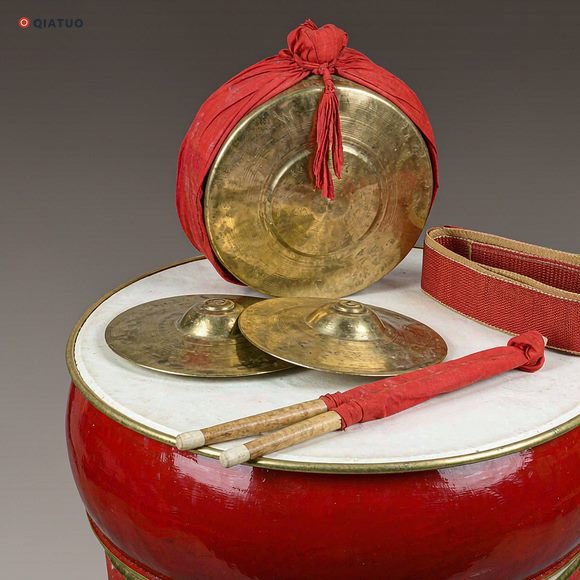
The sanjuban set is less one instrument, more one act. A drum, a brass gong, copper cymbals and clappers travel together, because the four-performer comedy routine needs all four voices to land a punchline. Sets are graded by audience — a six-inch drum for a classroom, a ten-inch for a street fair — so the sound matches the room you play. Schools order these first for New Year shows. The full lineup is on the sanjuban sets page.
11Team Building Drums (Tongxin)
The newest idea in the family is not a solo drum at all. The tongxin is a rope-and-ball cooperation drum: the group pulls the ropes, the ball bounces on the head, and the count only works when everyone pulls together. Thirty-two and forty centimeters, ropes and balls in the bag, ready for a corporate offsite or a camp. It sells as an activity rather than an instrument, and that is the point. The kit is on the team building drums page.
Which One Fits Your Program?
A quick way to choose: match the drum to the room before the budget. A street parade pulls you toward lion dance and chest drums. A classroom points to the early-learning line or a sanjuban set. An orchestra wants the deep voice of a huapen. If you are torn between two, tell us the venue and the headcount and we will name one — that is a faster conversation than a catalog.
Frequently Asked Questions
Which Chinese drum should a school order first?
For most schools a sanjuban set in 8-inch is the safe first order: it covers the New Year show, needs four players and no prior training. If the program is built around young children rather than performances, start with the early-learning line instead and add stands later.
How many drums does a lion dance team need?
Two covers most teams: a 16-inch practice drum for training nights and a 24-inch drum for parades, so the good head does not take the daily wear. Some teams add a gong and cymbals from the sanjuban kit to complete the street sound.
What is the difference between a tanggu and a war drum?
Both are barrel drums on stands. The tanggu runs the full size ladder with a buffalo-hide head for halls and ceremonies; the war drum uses full-grain yellow cowhide on a toon shell and is voiced to cut through an orchestra. If you need one drum for many jobs, the tanggu is the safer pick.
Talk to the Workshop
Tell us the venue, the headcount and the occasion, and we will name the drum that fits — send your requirements here.