Most buyers imagine OEM as a black box: a logo goes in, and months later a container appears. It is not. The process runs in seven visible steps, each with something you approve and something we confirm — and the drum that comes off the line at the end sounds like every other drum from the bench, with your name on the shell. Here is the full walk for a first-time buyer, from the sketch you send to the container that leaves the yard.
| Step | You approve | We confirm |
|---|---|---|
| 01 Inquiry | Job, types, rough quantity | The spec sheet |
| 02 Design | Placement and color draft | Signed design sheet |
| 03 Sample | The drum in your hands | Approval to run |
| 04 Production | Progress photos | Batch built to the sheet |
| 05 Checking | Row photos, video walk | Fixes before packing |
| 06 Packing | Carton plan | Labeled, mixed loads sorted |
| 07 After-sales | The spares list | One-year replacement terms |
Step by Step: The Seven Moves
01Inquiry: What to Send
Start with four things, and none of them need to be polished. What the drums are for (a school program, a retail line, one event), which types and sizes you have in mind, the rough quantity you are working toward, and your logo if there is one — a sketch on paper is genuinely fine at this stage. Photos of a drum you like help too. The point of step one is alignment, not paperwork: tell us the job, and the specification writes itself around it. The OEM and ODM page lists what sits on the table before this step starts.
02Design and Confirmation
Your artwork meets the shell here. Logos get scaled to the curve of the barrel — a design that reads flat on screen wraps differently on a 26-centimeter drum — and we return a placement draft for each size in the order. Paint schemes get the same treatment: a color reference or a photo of the exact tone, confirmed before any brush moves. Text logos should come with the font name. This step ends with a sheet you sign off on, and that sheet is what the painters work from — which is why changes cost nothing now and cost a repaint later.
03Sample: The Drum You Hold
One drum, built to the confirmed design, ships to you before the batch runs. Hold it, strike it, hand it to a teacher or a player whose opinion you trust. Check the logo placement in real light, the paint edge under a thumb, the head at room pitch. If something feels off, this is the moment to say so — samples exist to absorb the changes that would be expensive later. A revised sample beats a revised container every time, and one round of adjustment is a normal part of the process, not a failure of it.
04Production: The Order in Motion
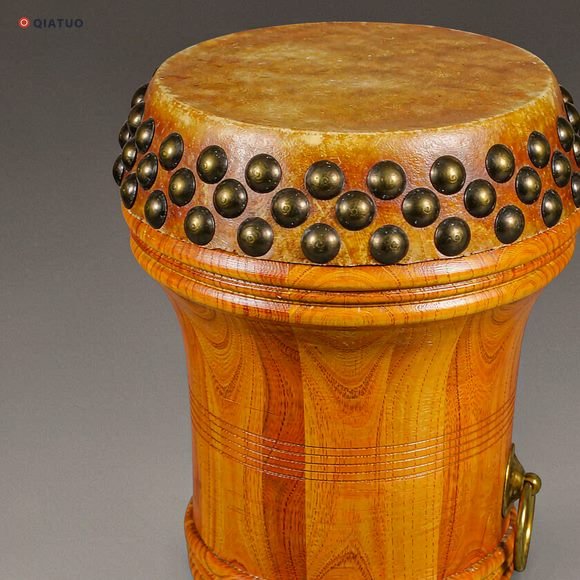
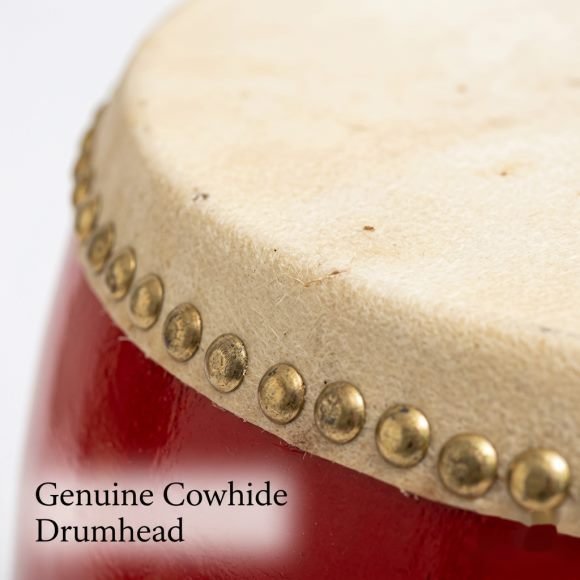
After the sample is approved, your drums enter the same line as every other drum — hides selected and matched, staved shells assembled, heads fitted and tacked, tuning done at the bench. That last sentence is the reassurance: your order is not a side workflow. The full making process is written up separately, and it is worth reading even mid-order, because every step you see there is a step you can ask about. Progress photos at each stage are standard on custom runs.
05Checking Before Packing
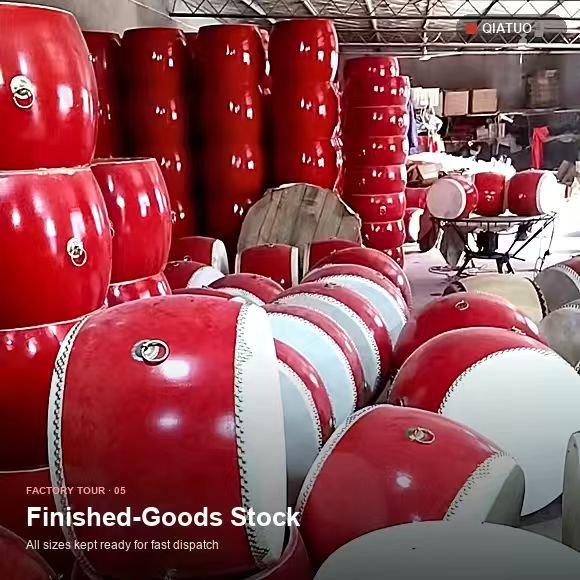
Before anything is boxed, the finished drums line up for a batch look: a photo of the row, close shots of your logo on each size, a short video walk if the order is large. This is your remote inspection — offered without being asked, because a workshop confident in its output has nothing to hide from it. If anything reads wrong to you, flag it in this window. Corrections here cost a morning; corrections after loading cost a ocean crossing.
06Packing and the Container
Drums travel individually cartoned, heads protected with edge wrap, stands broken down with hardware bagged and taped to the frame. Mixed orders — and mixed is the normal case — are packed line by line and labeled by destination, so a distributor receiving sanjuban sets for schools, tanggu for a temple order and a fan drum line for dancers can check them in without opening everything. Tell us what else shares the container; damp and sharp cargo ride elsewhere.
07After the Container Lands
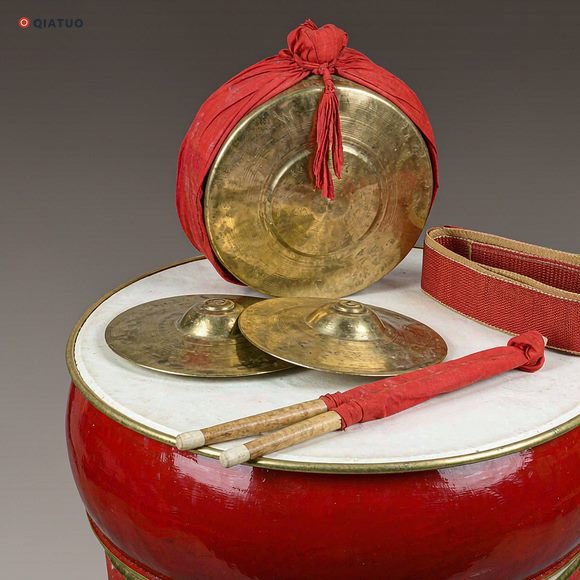
The relationship does not end at the port. Our terms run to a one-year replacement on non-man-made damage, and spares — sticks, straps, bags, stand parts — ship against a simple list, so a bent stand leg in your second month is an email, not a dispute. Reorders reuse the confirmed design sheet, which means the second container looks like the first without renegotiating anything. That consistency, order after order, is the part buyers end up valuing most.
What OEM Actually Changes
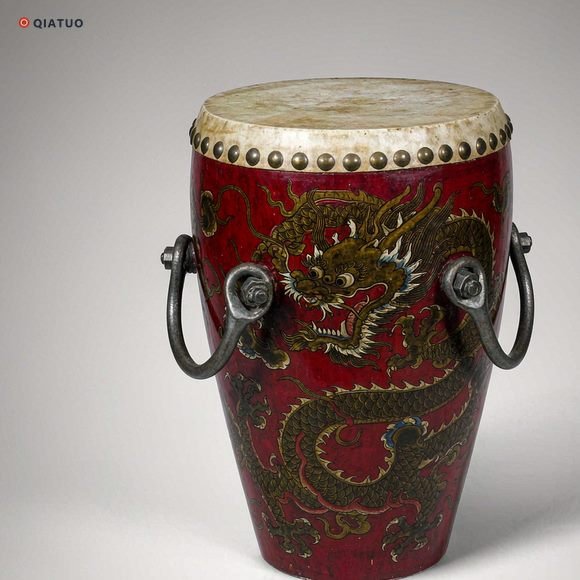
Customization touches the outside; the craft underneath stays fixed. Your logo, your paint scheme, your sizes, your packaging — all open. The hide selection, the staved shell, the tacked head, the tuning at the bench — none of that changes, because that is the part that makes the drum a drum. Buyers sometimes arrive wanting to thin out the head specification for budget; a straight answer serves better here: the head is the last place to save money, and we would rather steer the budget toward the paint job you actually see every day.
Where First-Timers Overthink It
Three worries come up every week. The first is artwork panic — buyers delay orders because the logo is not final; a sketch and a font name are enough to start step two, and the finished file can catch up. The second is size doubt: buyers fear committing to the wrong diameter, which is exactly what the sample step exists to settle. The third is mixing: buyers assume one container must hold one drum type. It does not — sets for the schools, tanggu for the temple order and a fan drum line for the dancers ride together, each boxed to its own spec.
Frequently Asked Questions
How small can a first OEM order be?
Small enough to be sensible. Many first partnerships start with a sample drum or a short pilot run to test the market, then scale once the shells are selling. Tell us the goal — testing a brand, filling a catalog, kitting one event — and the first step gets sized to match rather than pushed toward a container on day one.
What artwork do you need for the shells?
A vector file is ideal; a clean, high-resolution image also works. What matters most is color reference — a paint code or a photo of the exact tone — because shells are painted by hand and the reference keeps the batch consistent. Text logos should include the font name.
Can I mix drum types in one container?
Yes. Sanjuban sets, tanggu drums, fan drums and accessories share a container regularly, each line boxed to its own spec and labeled for its destination. Mixed loads are the normal case for distributors, not the exception — tell us the breakdown early so the packing plan accounts for it.
Talk to the Workshop
Bring us the sketch — even a napkin version — and we will take it from step one: start the conversation here.