A drumhead is skin, and skin is alive. It drinks the air, swells on damp days, dries out over a heater, and the pitch wanders as it does. That is not a defect — it is the material doing what leather does. The good news is that a wandering drum almost always comes back with two things: a small adjustment and better habits. This guide covers both — which kind of head your drum has, how each one is tuned, and the care that keeps a good head sounding good for years.

First, Know Which Head You Have
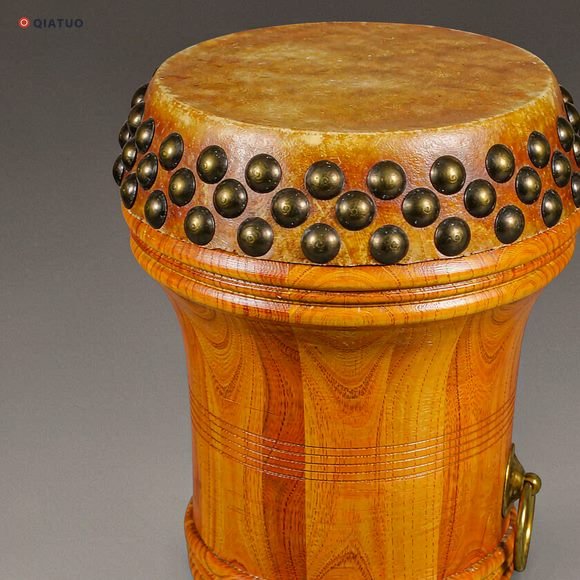
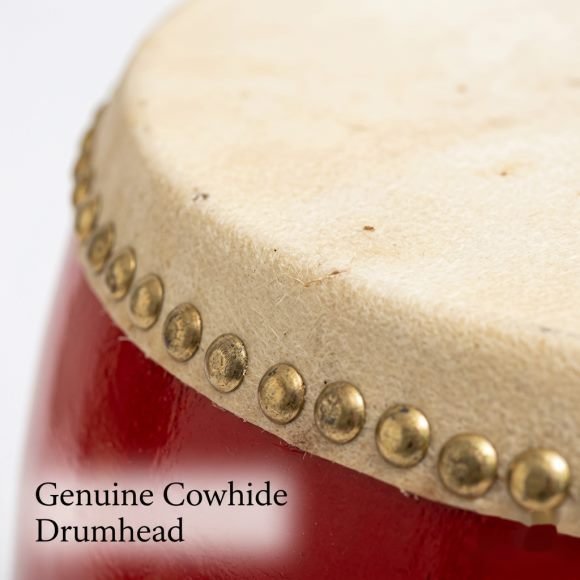
Look at the edge of the head. If metal tacks or round studs run around the rim and fix the skin straight to the shell, you have a tacked head — the factory set the tension when the drum was built, and that pitch is baked in. If instead you see cords lacing between two rings or zig-zagging down the shell, you have a rope-tensioned head, and the lacing is your tuning control. Most modern Chinese drums — the tanggu, waist and flower pot lines, for instance — are tacked; older and traditional designs, and some stage drums, run rope. Neither is better. Tacked heads hold their pitch longer; rope heads can be adjusted on the fly. Knowing which one you own decides everything in the next sections.
| Tacked head | Rope-tensioned head | |
|---|---|---|
| How the skin is fixed | Metal tacks or studs on the rim | Cords lacing between rings |
| Tuning | Set at the workshop | Adjust the lacing yourself |
| Pitch behavior | Steadier over time | Adjustable on the fly |
| Found on | Tanggu, waist, flower pot lines | Traditional and stage designs |
Tuning a Rope-Tensioned Drum
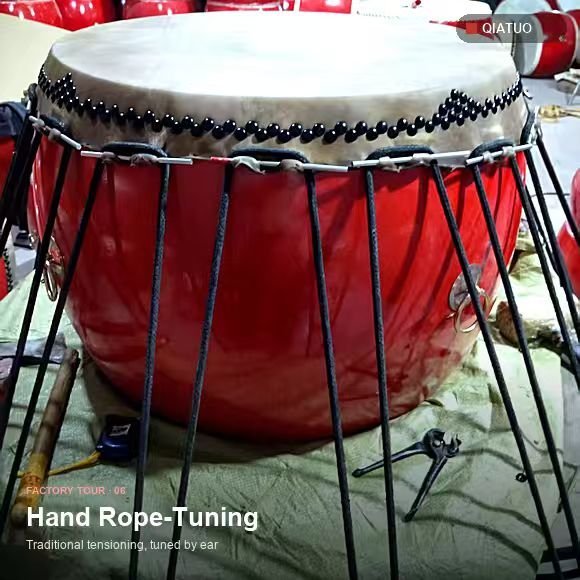
Rope tuning works through even pressure. The cords form a zig-zag between two rings, top and bottom, and every segment of that zig-zag pulls its share. To raise the pitch, shorten the pull: start at the segment nearest you, push the slack along one strand at a time, and work around the drum in one direction until you arrive back where you started. Then test the head in four spots with a stick or a knuckle — a tuned head answers the same note all the way around. If one zone rings higher, loosen the segments opposite it and re-tighten evenly. Small moves, often. A quarter-turn of tension per pass keeps the skin happy; big sudden pulls are how ropes snap.
What Tacked Heads Can and Cannot Do
A tacked head cannot be tuned with your hands, and knowing that saves worry. The tension was set when the hide was fitted, and from then on the head lives with the weather. On damp days it absorbs moisture, loosens, and the tone sits lower and duller; in dry heat it tightens and brightens. This is normal, and it reverses when the air does. What you control is the environment: a room that does not swing from damp to furnace keeps a tacked head steady. If a tacked drum has sounded flat for weeks in stable, dry air — not just on a rainy week — then the head may be past its best, which is the subject near the end of this guide.
Skin Care: The Four Habits
Four habits cover almost all of it. First, wipe the head with a dry cloth after playing — hand sweat and stage dust are what eat into a finish over a season. Second, keep oils and polishes off: raw hide is not leather boots, and coatings change how it vibrates. Third, warm the head gently before hard playing — a minute of soft palm strikes or simply your hand resting on it, which helps the skin resist a cold hall. Fourth, mind the moisture: a room that feels comfortable to you in a sweater is about right for a drum. A bathroom after a shower, a spot above a radiator, a car trunk overnight — those are the places heads go to die young.
Storage Between Seasons
Between seasons, store the drum the way it stands: upright or on its stand, head up, covered with a breathable bag rather than sealed plastic. Plastic traps whatever damp is in the air that day; fabric breathes. Keep it off exterior walls and away from windows where sun bleaches the shell paint. If the drum travels in a vehicle, let it settle in its case before a sudden unpacking into a warm hall — the shock is the harm, not the trip itself. For long storage, leave rope lacing at its even resting tension and touch nothing on a tacked head; both systems prefer stability over intervention. Our note on the Matun drum village shows what a storeroom of waiting drums looks like.
Travel, Weather and Stage Days
Stage days are the stress test. Cold halls, hot lights and a crowded backstage all push the head around in one evening, so plan for it: arrive early, let the drum sit in the space while you set up, and expect the first ten minutes of playing to settle it. Keep a dry cloth in the bag for a quick wipe before the set. If the performance is outdoors, shade beats open sun and a tarp beats morning dew — and if rain catches you, dry the head at room temperature, never against a heater. The drums that last for years are rarely the gentlest ones; they are the ones whose owners dry them slowly and store them well.
When a Head Is Done
Heads retire with symptoms, not birthdays. Watch for three: a tone that stays dull and low no matter how dry the air gets; a visible dip or slack patch near the center or an edge; and a buzz that sits in one spot when you tap around the rim. Any of those means the hide has stretched or torn past what care fixes. At that point, do not glue, tape or improvise — a head is replaced, and replacement is a workshop job, because matching a new skin to the shell is the whole craft. Our walkthrough of the making process shows what that fitting involves. Our own terms run to a one-year replacement on non-man-made damage; outside that window, send photos and we will quote the refit.
Frequently Asked Questions
Why does my drum sound flat on humid days?
The head is absorbing moisture from the air, which loosens the skin and drops the pitch. It is normal for both tacked and rope-tensioned drums, and it reverses as the air dries. Playable anyway? Then play. If the flat tone bothers you, a dry room for a day usually restores it.
Can I tighten the ropes myself?
Yes, on a rope-tensioned drum — that is what the lacing is for. Work around the drum one segment at a time, keep the pulls even, and test the head in four spots as you go. Tighten by small amounts across several passes rather than one big pull, and stop when the four test spots agree.
How long should a drumhead last?
It depends on hours played, weather swings and storage far more than on age. A well-kept head that plays weekly and lives indoors runs for years; a head that tours outdoors in every weather retires sooner. Judge by the symptoms in the guide — a steady dull tone, a slack patch, or a one-spot buzz — rather than by the calendar.
Talk to the Workshop
Send a photo of your drum and a word about how it lives — indoors, outdoors, played daily — and we will tell you which care step changes things first, right here.