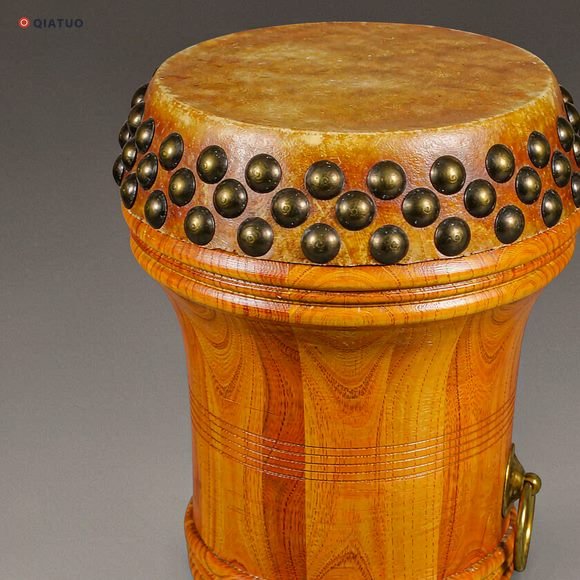
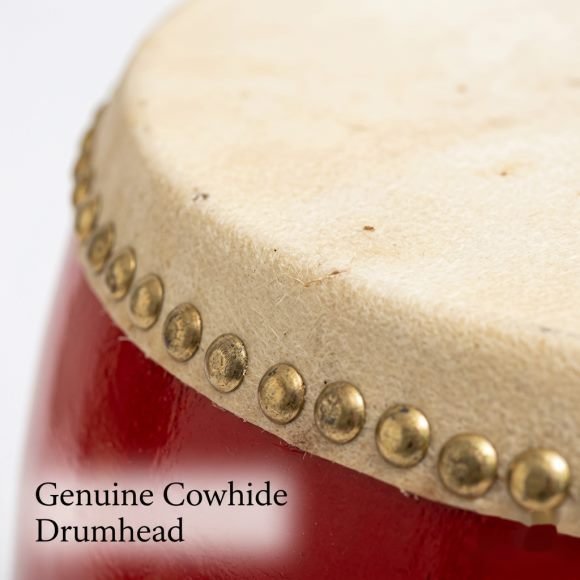
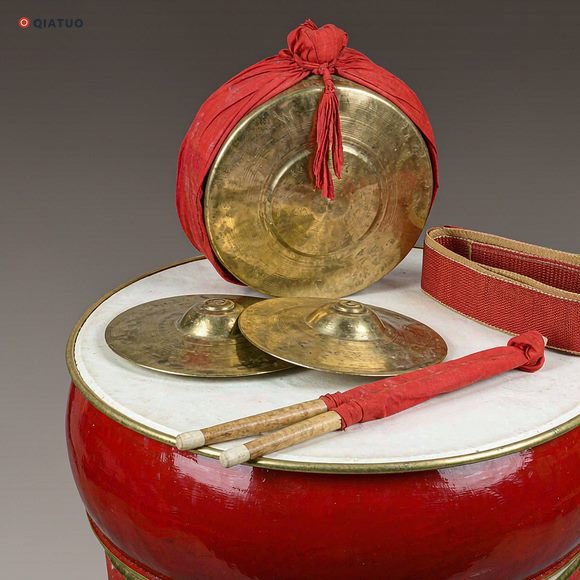
A 16-inch Chinese flower pot drum is the deep voice of an orchestra’s low section: a wide-top, narrow-bottom drum with a full-piece water-buffalo hide head, a gold dragon painted face, and a rolling stand that moves it across the stage. The flower pot form gives it a deep, warm tone that sits under the ensemble.
Orchestras use the flower pot drum as their low drum — the one that carries weight and resonance under the melody. Before the specs, it helps to know what an orchestra asks of a drum: it has to move between stages, sit at the right height for a standing player, and give a deep warm tone without a sharp attack. The 16-inch flower pot drum answers that with the traditional wide-top form, two rows of dense gold studs, and a rolling stand on casters. Every drum is made by hand in the Matun drum village.
What an Orchestra Needs
Four things decide whether a drum works in an orchestra or stays in a storeroom:
01Deep warm tone, not a sharp attack
The low section needs a drum that gives weight and resonance under the melody, not one that cuts through it.
02It has to move between stages
An orchestra relocates between venues and rehearsal rooms. A drum on wheels saves the lift.
03It has to sit at the right height
A standing player needs the drum at a playable height — the form and stand decide that.
04It has to look the part
Onstage, the drum is seen as well as heard. The face and finish are part of the performance.
Meet the 16-Inch Flower Pot Drum
| Spec | What the orchestra gets |
|---|---|
| Shape | Flower pot form — wide top, narrow bottom, deep resonance |
| Size (16-inch) | 52 × 26 × 60 cm (top opening / bottom / height) |
| Material | Full-piece water-buffalo hide head + solid-wood shell |
| Hardware | Two rows of dense gold studs + light rim binding |
| Styles | Gold Dragon (painted) + Plain Red |
| Stand | Red carved-wood stand or rolling stand with casters |
| Hand tolerance | 1–2 cm |
The Gold Dragon Face
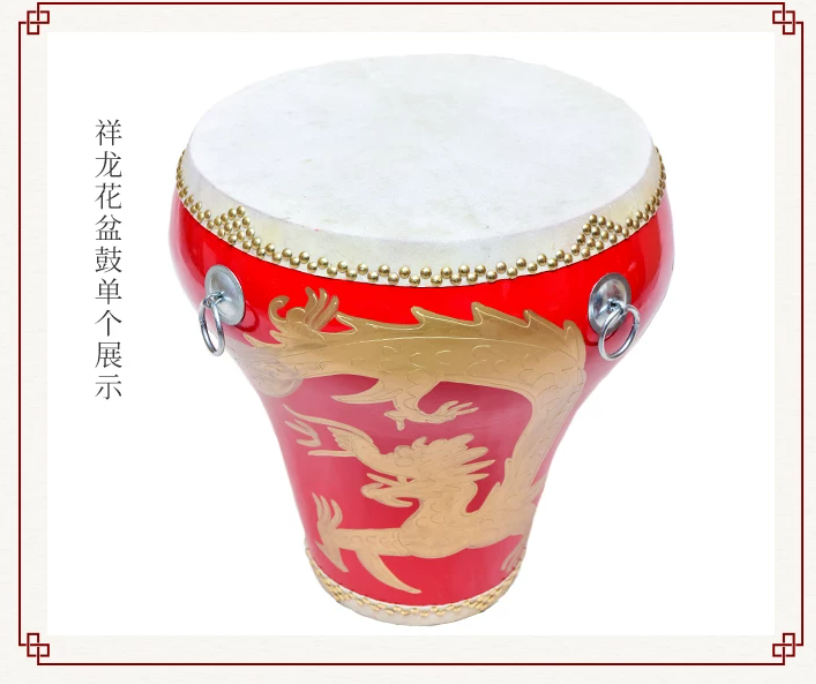
The Gold Dragon style is the ceremonial line. A gold Chinese dragon is painted across the red-lacquer face — the detail that turns a drum into a stage piece. For an orchestra that performs at festivals, opening ceremonies and formal concerts, that painted dragon reads as ritual and occasion, and it is why the Gold Dragon line is the one that gets chosen for ceremonial work.
Under the paint, the drum is the same traditional build: a full-piece water-buffalo hide head, a solid-wood shell, and two rows of dense gold studs holding the hide along the rim. The studs are the flower pot drum’s signature detail — more rows than a smaller drum needs — and they give the head the tension that produces its deep, warm note. There is also a Plain Red line for orchestras that want the sound without the painted dragon.
The Rolling Stand
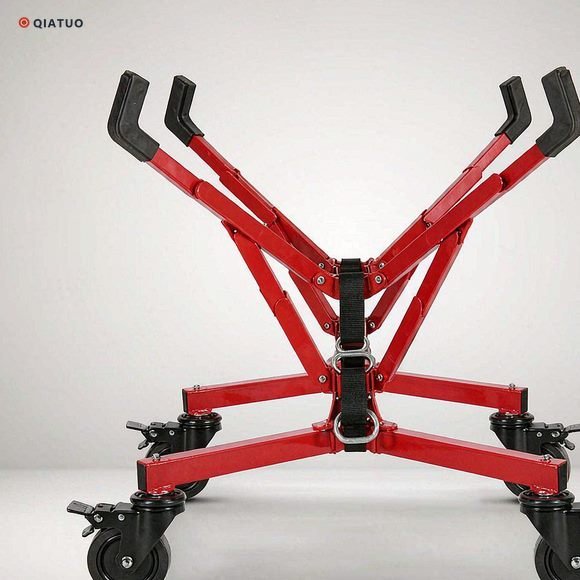
The rolling stand is what makes the flower pot drum practical for an orchestra. It is a red stand on casters — several wheels, some with brakes — that holds the drum at playing height and rolls it across the stage or between rehearsal rooms. A 16-inch drum with a solid-wood shell and a hide head is heavy enough that a wheeled stand is not a luxury; it is what keeps the drum moving with the ensemble.
There is also a red carved-wood stand for orchestras that want a fixed, traditional look. The two setups share the same drum: the rolling stand for groups that move often, the carved-wood stand for a permanent stage position. Either way, the drum sits at a playable height for a standing performer.
Deep Warm Tone for the Low Section
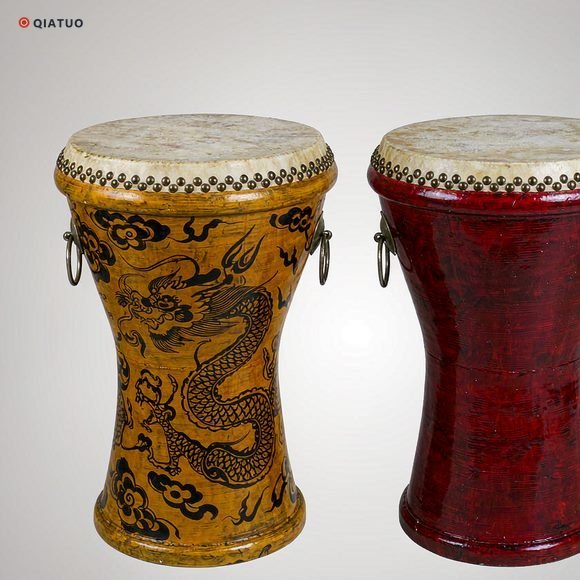
The flower pot form is what gives this drum its voice. The wide top and narrow bottom build a deep, resonant chamber, and the full-piece water-buffalo hide head gives a warm, rounded note with a soft attack. That is exactly what a low section needs — a drum that adds weight and depth under the melody without a sharp, cutting strike. It is the deep warm tone that anchors an ensemble.
The 16-inch size, at 52 × 26 × 60 cm, is the standard for this work: large enough to carry a deep note, sized to sit on a stand at playing height. (An 18-inch version, at 60 × 30 × 60 cm, is available for orchestras that want more volume.) Note that these are three measurements — top opening, bottom and height — and the shell is hand-built, so allow 1–2 cm of tolerance.
Dragon Face or Plain Red
The flower pot drum comes in two looks. The Gold Dragon line paints a gold Chinese dragon across the red face — the ceremonial choice for festivals, opening ceremonies and formal concerts where the drum is seen as well as heard. The Plain Red line keeps the same deep warm tone in a clean, unadorned finish for orchestras that want the sound without the decoration. Same drum, same sound — the difference is what the audience sees.
Outfitting an Orchestra
Ordering is straightforward. Tell us how many drums and whether you want the rolling stand or the carved-wood stand, and we will match the drums to your ensemble — consistent hide, studs and finish across the set. For a large order or a custom look, our OEM and ODM options cover custom sizing, paint and packaging. A good way to start is with one drum: run it through a rehearsal and a performance, check the tone and the stand under real use, then outfit the rest.
Frequently Asked Questions
What is a flower pot drum?
It is a traditional Chinese drum with a wide-top, narrow-bottom body — the flower pot form — which builds a deep, resonant chamber. Struck on a full-piece water-buffalo hide head, it gives a deep, warm tone, so orchestras use it as their low drum. The 16-inch size is the standard for ensemble work.
What are the measurements of the 16-inch flower pot drum?
Three: 52 cm across the top opening, 26 cm at the bottom, and 60 cm high. These are three measurements — top, bottom and height — not two. The shell is solid wood and hand-built, so allow 1–2 cm of tolerance. An 18-inch version measures 60 × 30 × 60 cm.
What is the gold dragon face?
It is the ceremonial style: a gold Chinese dragon painted across the red-lacquer face. For orchestras that perform at festivals, opening ceremonies and formal concerts, the painted dragon reads as ritual and occasion. There is also a Plain Red line with the same deep warm tone in a clean, unadorned finish.
Does the flower pot drum come with a rolling stand?
Yes. It is available on a red rolling stand — casters, some with brakes — that holds the drum at playing height and rolls it across the stage or between rehearsal rooms. There is also a red carved-wood stand for a fixed, traditional stage position. The rolling stand suits orchestras that move often.
Talk to the Workshop
Tell us how many drums and whether you want the rolling stand or the carved-wood stand, and we will match the drums to your ensemble — send your requirements here.