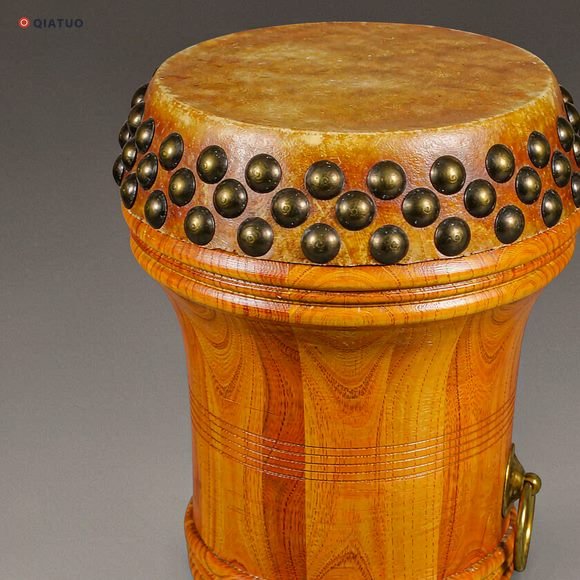
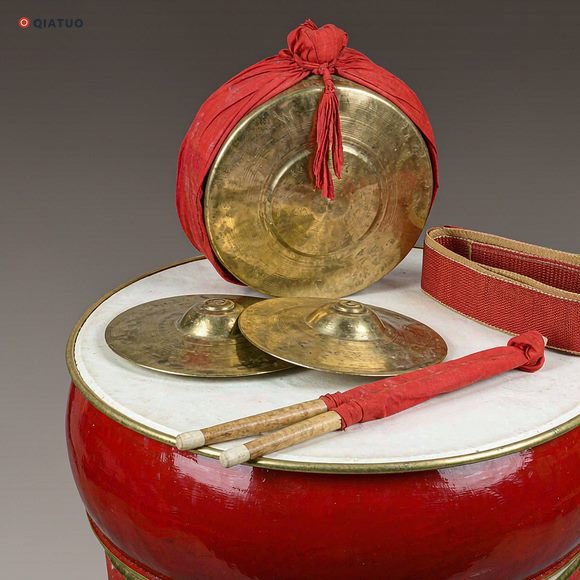
A 26 cm Chinese storytelling drum (shugu) is the teahouse drum: a small flat one-sided drum on a rope-tied folding stand, played with a single thin wooden beater while a storyteller performs. It is the instrument behind pingshu and the great Chinese drum-singing traditions — the drum that sits beside a storyteller in a teahouse and punctuates the tale.
What makes the shugu work for a working storyteller is the stand. Before the specs, it helps to know what a teahouse performer asks of a drum: it gets carried between teahouses, set up in a small space, played for a long set, and folded away again. The shugu answers that with a stainless X-folding stand that ties on with cotton rope and a Chinese knot, a full-grain cowhide head, and a single wooden beater — one drum, one performer, ready to travel. Every drum is made by hand in the Matun drum village.
What a Storyteller Needs
Four things decide whether a drum works in a teahouse or stays at home:
01It has to travel between teahouses
A working storyteller moves from venue to venue. A drum that folds flat and carries easily is the difference between a tool and a burden.
02It has to set up in a small space
A teahouse table is not a stage. The drum needs to sit close, at the right height, without a bulky stand taking up the room.
03It has to punctuate the tale
The shugu is not a percussion showpiece — it marks rhythm and emphasis in a story. The note should be clear and warm, not loud and sharp.
04It has to hold up to daily work
A storyteller’s drum gets played night after night. The hide, the stand and the rope all take real use.
Meet the 26cm Shugu Storytelling Drum
| Spec | What the storyteller gets |
|---|---|
| Shape | Small flat one-sided drum |
| Size | 26 cm diameter × 8 cm body height |
| Stand | 80 cm stainless X-folding, rubber wear pads, cotton rope and Chinese-knot tied |
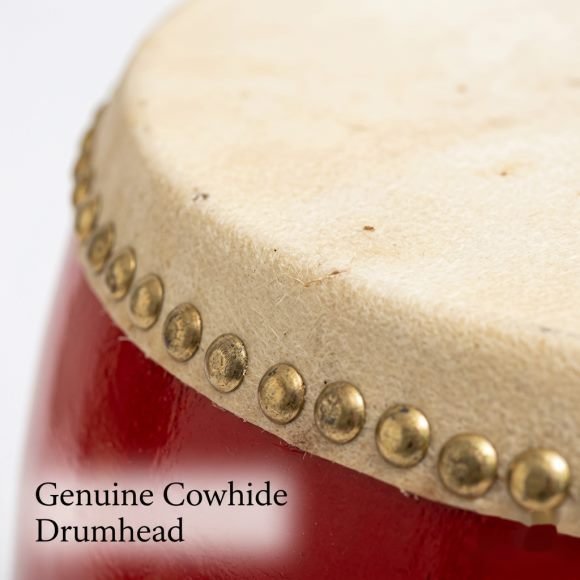
| Drumhead | Full-grain natural cowhide, one piece |
| In the set | One shugu beater (thin wooden drumstick) |
| Warranty | One-year free replacement for non-man-made damage |
The Rope-Tied Folding Stand
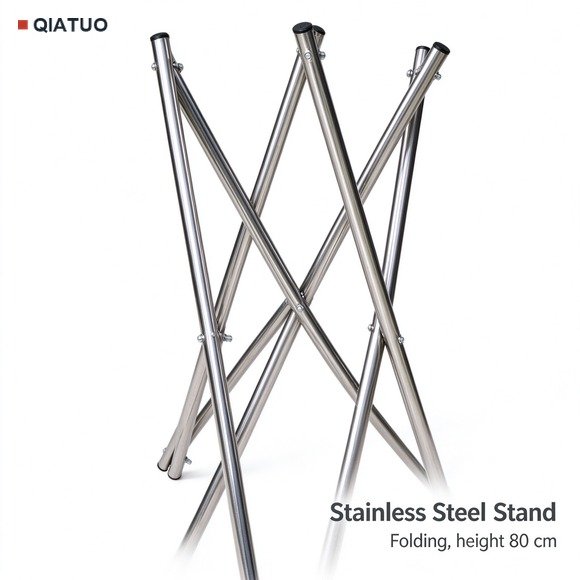
The stand is what sets the shugu apart. It is a stainless steel X-frame that folds flat, with rubber wear pads where the drum sits and cotton rope — tied with a Chinese knot — holding the drum body firm. Folded, it packs down to about 80 cm and travels easily; set up, it holds the drum at the right height beside a seated storyteller.
That rope-and-knot tie is the traditional shugu detail. It lets the drum sit snug without hard clamps, so the body can ring freely, and it keeps the whole setup light enough to carry between teahouses. For a performer who works different venues every night, a folding stand that sets up in seconds is not a luxury — it is the reason the drum gets used.
One Drum, Six Storytelling Traditions
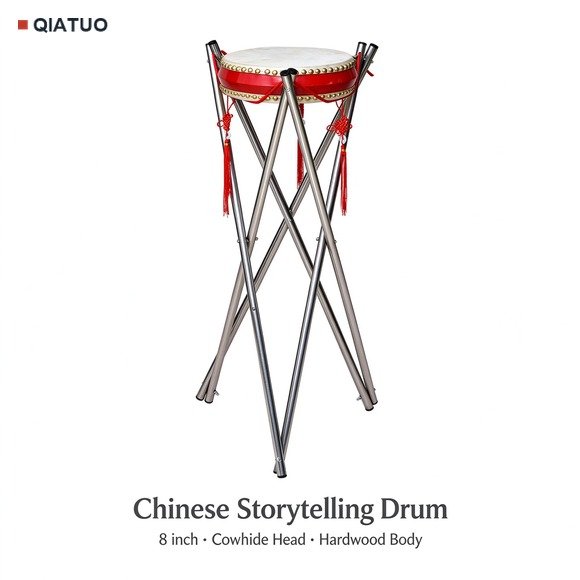
The shugu is the shared drum across the great Chinese drum-singing traditions: Jingyun Dagu, Meihua Dagu, Shandong Dagu, Jingdong Dagu, Dongbei Dagu and Hubei Dagu — six storytelling forms that each use a drum to mark the rhythm and turn of the tale. The 26 cm size is the standard for this work: large enough to carry a clear, warm note, small enough to sit beside a performer.
It is also the drum of teahouse pingshu — the storytelling art where a single performer tells a long tale and uses the drum to punctuate it. In that setting, the drum is a partner to the voice, not a solo instrument. The full-grain cowhide head gives a warm, rounded note that sits under the words rather than covering them, and one drum serves a whole performance. It is, in the traditional phrase, one drum for six storytelling traditions.
The Beater and the Warranty
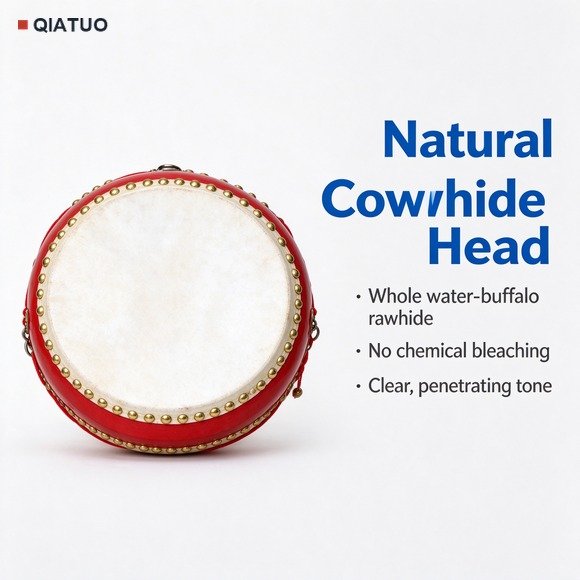
The shugu is played with a single thin wooden beater — a long, light stick with a rounded head, made to draw a clear note from the cowhide without tiring the hand over a long set. It ships with the drum, so a performer is ready to play as soon as the stand is up.
The drum is also built to be a working tool. It carries a one-year warranty — free replacement for non-man-made damage — which matters for an instrument that gets played night after night in a working teahouse. The head is full-grain natural cowhide, one piece, and the stand is stainless steel with rubber wear pads, so the parts that take the most use are the ones built to last.
Shugu or a Stage Drum
The shugu and a stage drum are built for different jobs. The shugu is small, flat and sits close beside a seated storyteller, marking rhythm and emphasis in a spoken tale — it is a partner to the voice. A chest or festival drum stands larger and projects across a hall for a musical performance. If the drum is there to support a story in a teahouse, the shugu is the one; if it is there to fill a stage with sound, a larger drum is.
Outfitting a Storytelling Set
Ordering is straightforward. Tell us how many performers and whether you want the rope-tied folding stand, and we will match the drums to your work — consistent hide, stand and hardware across the set. For a troupe order or a custom look, our OEM and ODM options cover custom sizing, paint and packaging. A good way to start is with one drum: run a full teahouse set on it, check the stand, the hide and the beater under real use, then outfit the rest.
Frequently Asked Questions
What is a shugu storytelling drum?
It is the small flat one-sided drum used in Chinese storytelling and drum-singing. A 26 cm cowhide drum sits on a rope-tied folding stand beside a seated performer and is played with a single thin wooden beater to mark rhythm and emphasis in the tale. It is the instrument of teahouse pingshu and the great drum-singing traditions.
What is the rope-tied folding stand?
It is the shugu’s stainless steel X-frame stand, which folds flat for travel and sets up to hold the drum at the right height. The drum body is tied on with cotton rope and a Chinese knot, with rubber wear pads where it sits — the traditional detail that lets the drum ring freely while staying firm. Folded, it packs down to about 80 cm.
Which storytelling traditions use the shugu?
Six: Jingyun Dagu, Meihua Dagu, Shandong Dagu, Jingdong Dagu, Dongbei Dagu and Hubei Dagu — the great Chinese drum-singing forms. The shugu is also the drum of teahouse pingshu. One drum serves across all of them, which is why it is traditionally called one drum for six storytelling traditions.
Does the storytelling drum come with a warranty?
Yes. It carries a one-year warranty — free replacement for non-man-made damage. For an instrument that gets played night after night in a working teahouse, that coverage matters. The full-grain cowhide head, stainless stand and cotton-rope tie are all built for daily professional use.
Talk to the Workshop
Tell us how many performers and whether you want the rope-tied folding stand, and we will match the drums to your work — send your requirements here.