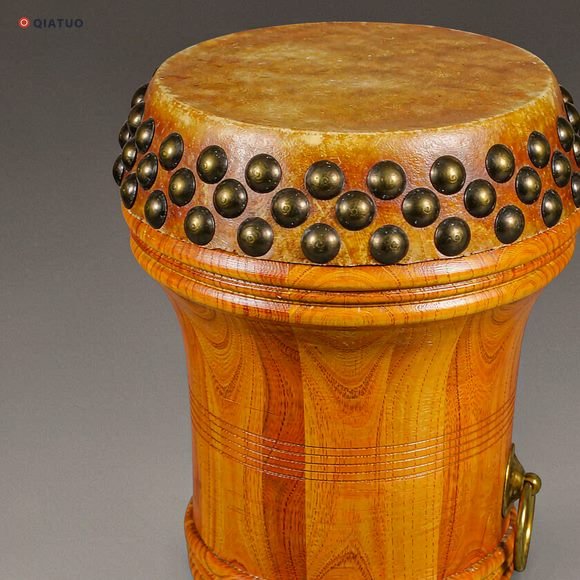
A Sanjuban percussion set sized by audience is a drum, gong and clappers kit matched to how many people you play for — from 100 guests in a classroom to 1000 at a street fair. The size you pick follows the crowd, so the sound lands without being thin or overpowered.
This is the classic kit for Chinese comedy-rhythm performance — the four-person routine that mixes spoken lines with percussion. Before the specs, it helps to know what a group buyer asks of a kit: a size matched to the audience, the whole percussion line in one box, and gear that survives being hauled between shows. This set answers with sizing from 100 to 1000 guests and a drum, gong and clappers together. Every drum is made by hand in the Matun drum village.
What Group Buyers Need
Four things decide whether a kit works for a performance group:
01A size matched to the crowd
Playing for 100 guests is not playing for 1000. The drum size should follow how many people you play for.
02The whole percussion line
The routine needs a drum, a gong and clappers — and they should arrive together, not bought separately.
03It has to survive the road
School shows and street stages mean hauling gear between venues, show after show. The build has to take it.
04It has to read in a routine
The kit backs a spoken comedy rhythm, so each piece has to cut in clearly on cue.
Meet the Sanjuban Percussion Set
| Spec | What the group gets |
|---|---|
| Sizing | By audience — 100 to 1000 guests |
| Drum sizes | 6-inch 20×14 | 7-inch 23×17 | 8-inch 26×17 | 9-inch 30×17 | 10-inch 33×17 cm |
| Set | Drum + gong + clappers, percussion set |
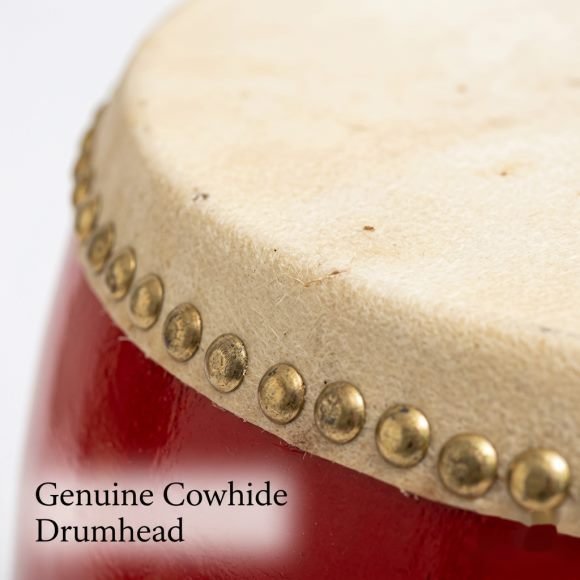
| Material | Full-piece water-buffalo hide head + solid-wood red-lacquer shell |
| Hardware | Gold rounded studs + thick drum ring |
| Audience sizing | 6-inch ~100 | 7-inch 150–300 | 8-inch 200–500 | 9- and 10-inch 500–1000 guests |
Sized by Audience: 100 to 1000 Guests
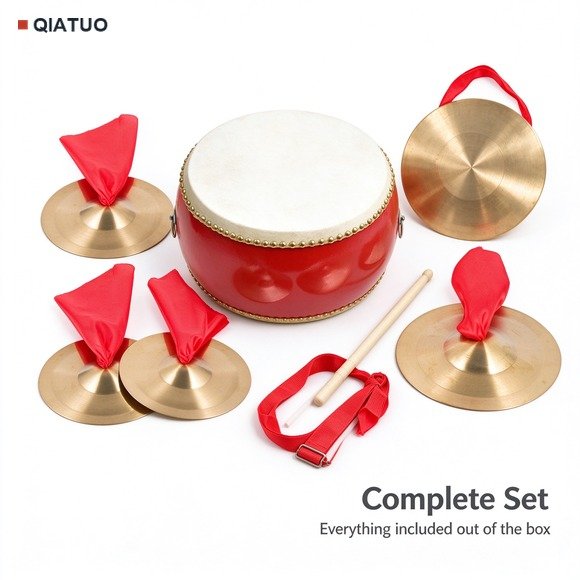
The set is sized by how many people you play for — the detail that makes buying simple. A 6-inch drum suits a classroom of around 100 guests. A 7-inch covers 150 to 300. An 8-inch carries to 200 to 500, which is the all-round one for most school shows and street sets. The 9- and 10-inch drums reach 500 to 1000, for a big street fair or a large hall. Match the drum to the crowd, and the routine lands.
That sizing ladder is what a group buys against. It means a school ordering for a New Year show, a community group for a festival, or a troupe for a street stage can all pick the right drum without guessing. The drums run from small to large, all with the same red-lacquer shell and water-buffalo hide head — just scaled to the room.
Drum, Gong and Clappers
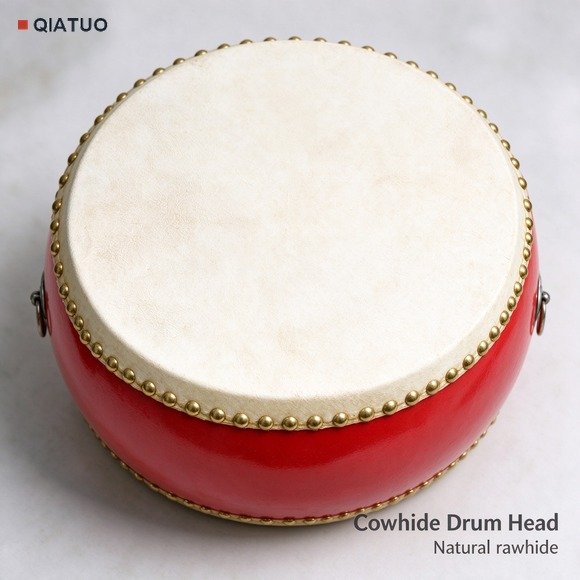
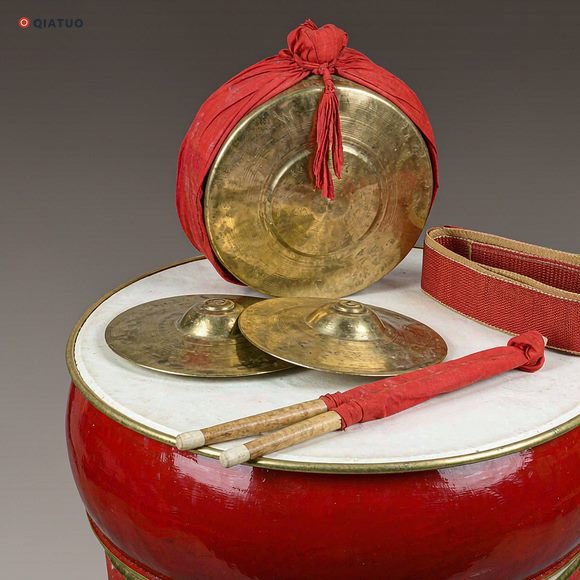
The set carries the whole percussion line: a red-lacquer drum with a water-buffalo hide head, a brass gong, copper cymbals, and the clappers and sticks that finish the routine. Out of the box, a group has what the comedy-rhythm act needs — the drum for the beat, the gong and cymbals for the punch lines and accents, and the clappers for the spoken rhythm.
That is the classic four-person routine. The performers trade lines and hit the instruments to mark the jokes and the timing, so each piece has to sound clearly on its own. With the drum, gong and clappers in one set, a group is ready to rehearse and perform without hunting for parts. The hardware — gold rounded studs and a thick ring — holds the hide through repeated hard strikes.
Choosing Your Size
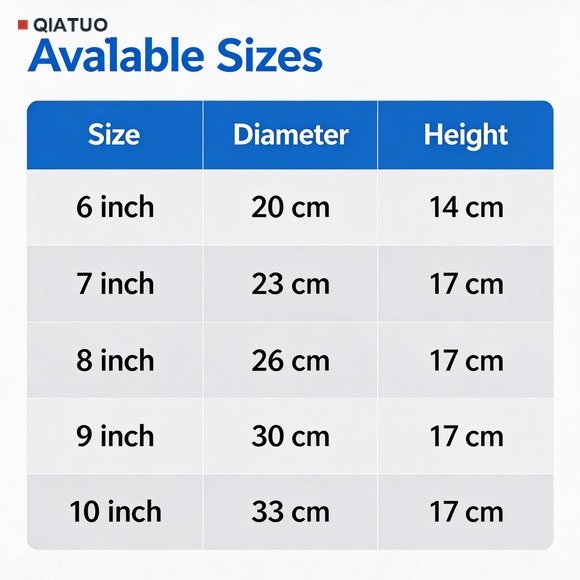
Choosing is a matter of the crowd. For a classroom or small indoor show of around 100 guests, the 6-inch keeps the sound close. For 150 to 300, the 7-inch steps up. For 200 to 500 — a school hall, a street stage, a community event — the 8-inch is the one most groups pick. For 500 to 1000 at a big street fair or hall, the 9- and 10-inch carry further.
The build is the same across the range: a full-piece water-buffalo hide head on a red-lacquer solid-wood shell, gold rounded studs, and a thick drum ring. The only thing that changes is how far the sound has to reach. So a group can start with the size its shows need today and add larger drums as the venues grow — the kit stays consistent across the set.
Why the Full Percussion Line Matters
The comedy-rhythm routine only works when the whole line is there. The drum sets the beat, the gong lands the punch lines, and the clappers keep the spoken rhythm moving — take one away and the act loses its shape. That is why the set ships as a line rather than as a single drum: a group can hand a piece to each performer and run the routine as it is meant to be played. Because every piece is matched in build and tone, the kit sounds like one instrument across the stage. For a school or street group that performs the routine again and again, having the full line in one box is what keeps rehearsals simple and the shows tight. That consistency is what separates a matched set from a pile of loose instruments.
Outfitting a Group
Ordering is straightforward. Tell us roughly how many people you play for, and we will match the kit to your crowd — consistent drum, gong and clappers across the set. For a large order or a custom look, our OEM and ODM options cover custom sizing, paint and packaging. A good way to start is with one kit at the size your shows need: run a full performance on it, then outfit the rest.
Frequently Asked Questions
What is a Sanjuban percussion set?
It is a complete kit — a red-lacquer drum with a water-buffalo hide head, a brass gong, copper cymbals and clappers — sized by how many people you play for. It backs the classic four-person comedy-rhythm routine, where performers trade spoken lines and hit the instruments to mark the jokes and timing. The set runs from 100 to 1000 guests.
How do I choose the size for my audience?
Match the drum to the crowd. A 6-inch suits around 100 guests, a 7-inch covers 150–300, an 8-inch carries to 200–500 (the all-round choice), and the 9- and 10-inch reach 500–1000 for a big street fair or hall. Sizing by audience means the sound lands without being thin or overpowered.
What comes in the set?
The drum, a brass gong, copper cymbals, and clappers and sticks — the whole percussion line for the comedy-rhythm routine. The drum is a full-piece water-buffalo hide head on a red-lacquer solid-wood shell with gold rounded studs and a thick ring. Everything a group needs to rehearse and perform arrives together.
Is the set good for school and street shows?
Yes. The set is sized for school New Year shows, community events, company gatherings and street stage sets — from 100 guests in a classroom to 1000 at a street fair. The build survives being hauled between shows, and each piece — drum, gong, clappers — cuts in clearly on cue. It is the classic kit for the four-person comedy-rhythm routine.
Talk to the Workshop
Tell us roughly how many people you play for, and we will match the kit to your crowd — send your requirements here.