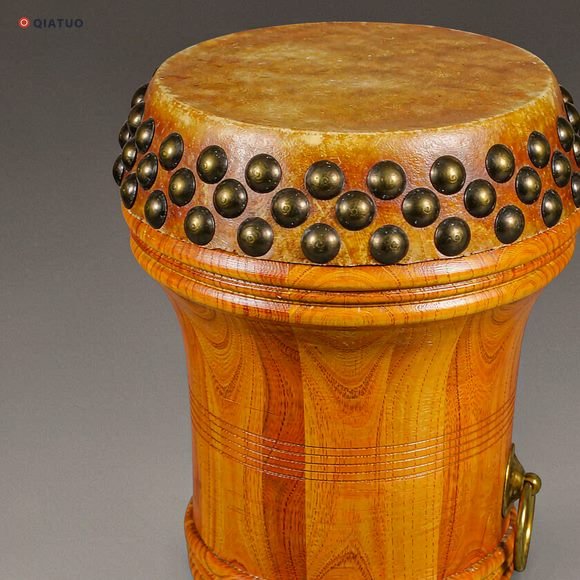
A 10-inch Chinese war drum with gong stand is the starter kit for a student drum line: a compact 33 cm barrel drum on a sun-seasoned yellow cowhide head, paired with the gong stand setup that lets a school percussion group run a Chinese-style performance from one station. It is the size that fits a practice room and a marching line at the same time.
Student drum lines face a specific problem. The instruments have to be loud enough to carry across a field, light enough for younger players to move, and tough enough to survive a semester of daily rehearsals. A full-size ceremonial war drum solves the sound but fails the other two. The 10-inch sits at the entry of the size ladder for exactly this reason — it teaches the technique and the ensemble timing on a real war drum, without asking a middle-school player to haul a 60 cm barrel. Every drum is built by hand in the Matun drum village, where the war drum family runs from 10 inches up to a 24-inch stage drum.
The 10-Inch at a Glance
| Spec | What the drum line gets |
|---|---|
| Size | 10 in — 33 cm head diameter, 30 cm body depth |
| Shell | Chinese toon wood, red lacquer |
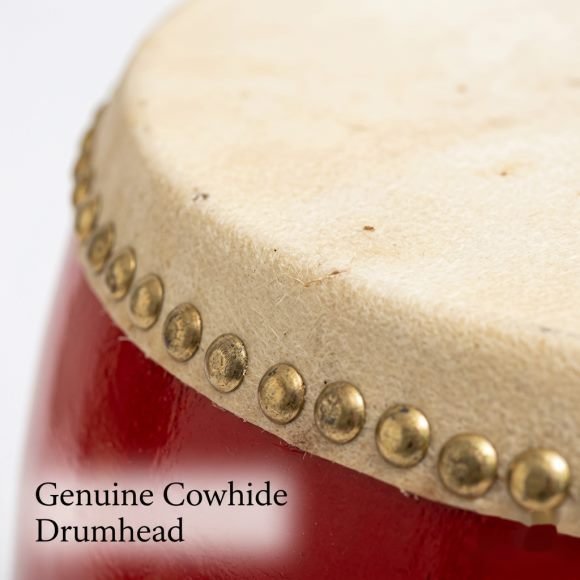
| Drumhead | Full-grain yellow cowhide (Chinese yellow cattle hide), sun-seasoned |
| Tension | Metal rod and bolt system, copper-wrapped rivets |
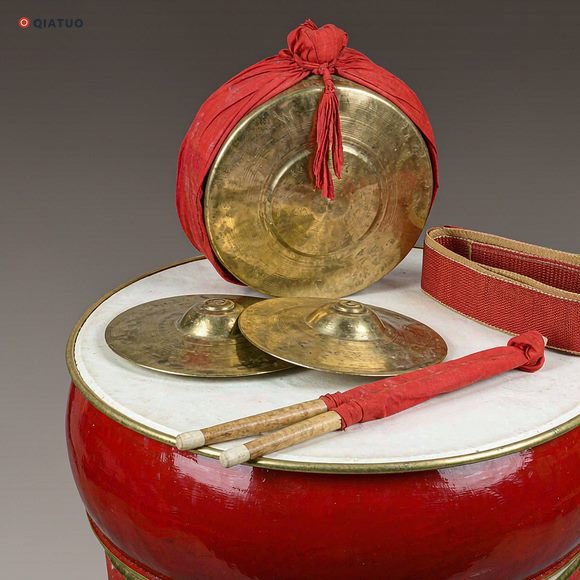
| Setup | Drum with gong stand combination |
| Hardware | Gold-tone side rings, metal banding on the red shell |
| Best for | Student drum lines, school percussion groups, beginner ensembles |
Why Student Drum Lines Pick 10 Inches
Size is the first decision a school makes, and 10 inches is where most student lines start. The head is big enough to give a clear, projectable stroke that a coach can hear across a rehearsal hall, and small enough that a younger player controls it without fighting the instrument. The 30 cm body depth keeps the tone focused rather than booming, which matters when eight students are drumming in a small room at once.
There is a practical ladder underneath it. Lines that grow usually step up to the 12 and 14-inch war drums for section leaders and the 16-inch and above for the front of the line — all sharing the same toon shell, yellow cowhide head and rod-tension build. So a school can buy one 10-inch drum per student this year and add bigger drums later, and the whole set still sounds and feels like one family. That is the argument for starting here rather than buying one large drum the students have to take turns on. It also spreads the budget: a line that buys a drum per student instead of a shared pool keeps every player on the instrument through the whole rehearsal, which is how timing actually gets built.
Sun-Seasoned Yellow Cowhide
The playing surface is full-grain yellow cowhide — genuine Chinese yellow cattle hide, not buffalo — and the war drum line is built on a sun-seasoning step: the hides are cured in open air before mounting, the traditional method that settles the grain and gives the drum its warm, hard-striking voice. For a student drum line this shows up as a head that takes a hard stick without going sharp or glassy, and holds its pitch through a season of daily play.
Grain variation, light scars and color differences across the hide are marks of genuine material rather than defects, and a mounted head can be re-tensioned as it settles with use. The rod-and-bolt tension system running around the shell is what makes that tuning possible on a practice instrument — a coach can bring a drum back to pitch between rehearsals without a workshop. The same hide-to-head craft is walked through in our making-process guide.
The Gong Stand Setup
The “gong stand” in the name is the combination format this drum is sold in: the war drum paired with the stand that holds it at playing height beside a gong, so one station covers both the drum pulse and the gong punctuation that marks a Chinese-style performance. For a student line this is the difference between a drum class and an actual performance rig — the students learn the call-and-response between drum and gong the way it is played on stage.
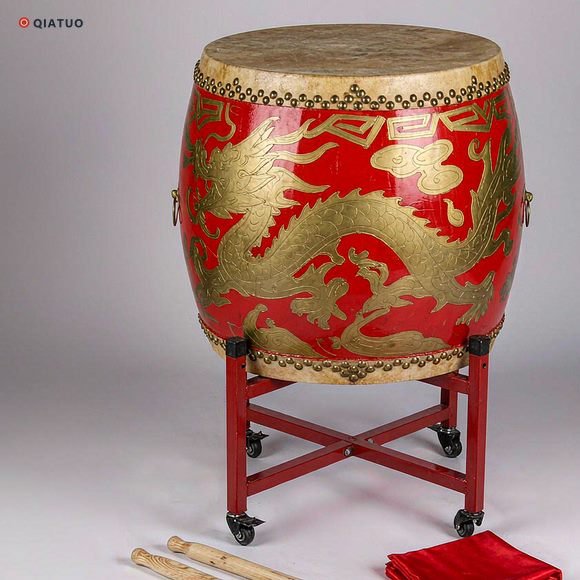
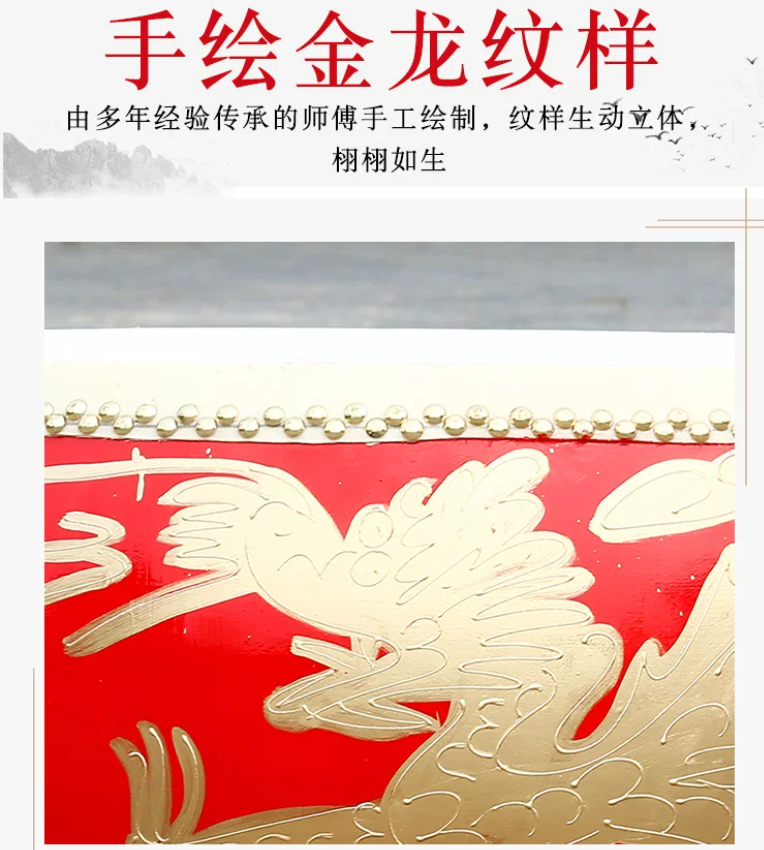
The red toon shell carries the classic finish, gold-tone side rings for moving the drum, and metal banding that holds up to transport between the band room and the field. Schools that want the ceremonial look can order the hand-painted gold dragon shell — the same craft shown above — through our custom shell program, and lines that want their school mark on the drum can ask about custom shell work.
Ordering for the Drum Line
STEP 1Count the players
How many students, what age range, and how often the line plays. A class set for weekly practice and a competition line that rehearses daily get matched differently — start with one drum per active player rather than a shared pool.
STEP 2Confirm the setup
Drum with gong stand for performance-style work, or drum only for pure practice. The gong stand combination is what turns a practice session into a rehearsed routine, so most performance lines want it from the start.
STEP 3Start with one class set
Order a small first batch, run a term of rehearsals on it, and check the hide, the rod tension and the stand hardware under real student use. Schools that test a class set come back with far more accurate numbers for the full order.
STEP 4Build the line
Grow the size ladder as the program matures: 10-inch for beginners, 12 and 14 for section leaders, the bigger drums for the front. Because the family shares shell, hide and build, a set assembled over two seasons still plays as one line.
Frequently Asked Questions
Why do Chinese war drums come with a gong stand?
The gong stand is the traditional performance format: the drum carries the pulse while the gong marks the accents and transitions of a Chinese-style routine. Selling the drum with the stand lets a group — a student drum line included — rehearse and perform the complete call-and-response instead of practicing the drum part alone.
How does a Chinese war drum compare to a marching band bass drum?
A marching bass drum is built for volume and even tone across a field; a Chinese war drum is built for a sharper, warmer stroke with more tonal character, on a toon shell with a yellow cowhide head. Student lines that want a Chinese-style performance — rather than a Western marching sound — pick the war drum for its voice and its drum-and-gong format.
How do you play a Chinese war drum?
Played standing with a pair of beaters, the war drum answers fast strokes near the center and deeper tones with more weight into the head. On a student line the coach usually starts with steady pulse patterns and clear cue strokes — the drum’s focused 30 cm depth keeps each stroke audible so timing errors are easy to hear and fix.
Talk to the Workshop
Tell us the size of your drum line, the players’ ages and how often you rehearse, and we will match the drum count and setup to the program — send your drum line details here and start with a class set before you outfit the full line.