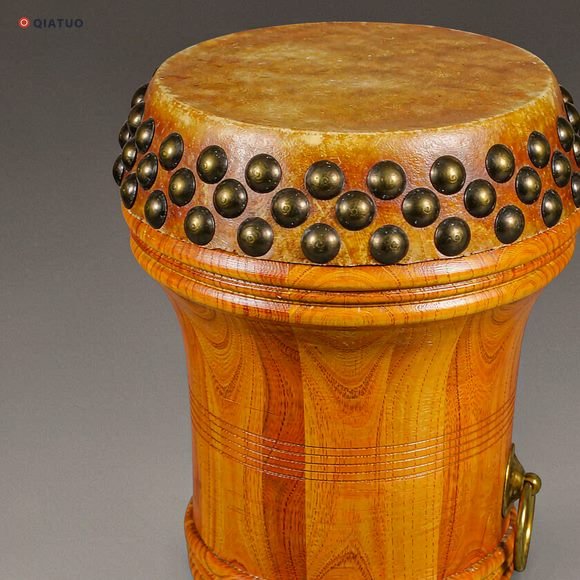
A 12-inch Chinese tanggu drum with rolling stand is the rehearsal-room drum for opera troupes and folk ensembles: a 40 cm head on a 40 cm paulownia shell, buffalo-hide playing surface, and a folding X-frame stand with swivel casters that lets one person roll the drum from the storage corner to the middle of the room in seconds. It is the size that keeps a rehearsal at full energy without drowning out the singers.
Ask any troupe what eats up rehearsal time and the answer is rarely the music — it is the setup. Drums that live on high shelves, stands that need two people to fold, instruments that are too loud for the room and too quiet for the back row. The 12-inch tanggu with a rolling stand was picked for exactly this stage of an ensemble’s week: the nightly grind where the beat gets built. Every drum here is made by hand in our workshops in Matun Village, the village where most of China’s drums are crafted, and the tanggu line runs from 7 inches all the way to 2 meters — with the 12-inch sitting at the rehearsal sweet spot.
The 12-Inch at a Glance
| Spec | What the ensemble gets |
|---|---|
| Size | 12 in — 40 cm head diameter, 40 cm body depth |
| Shell | Paulownia wood, red lacquer |
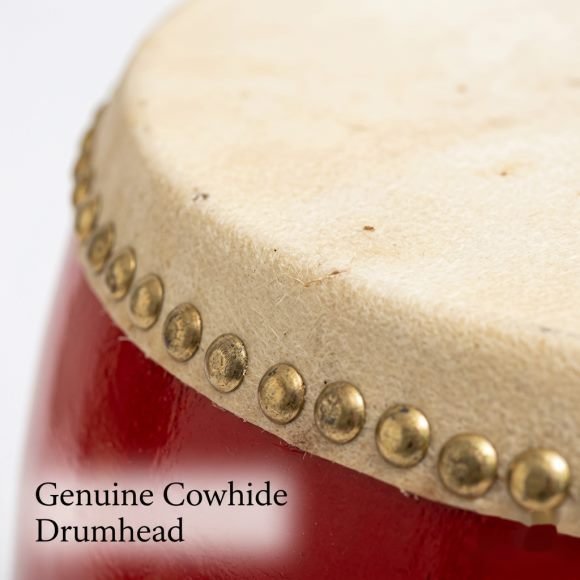
| Drumhead | Buffalo hide — first-layer (high grade) or second-layer (standard) |
| Trim | Gold edging, round-head nails, metal hanging rings |
| Stand | X-frame folding stand, swivel casters, about 80 cm total height |
| Style lines | Plain red, or hand-painted gold dragon |
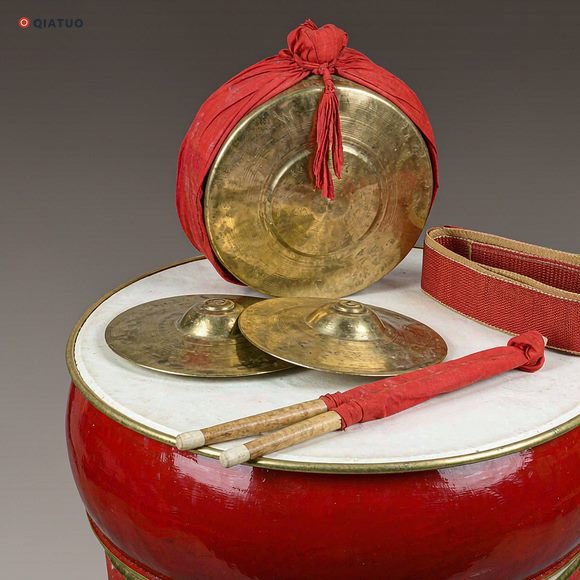
| Included | A pair of 30 cm wooden beaters, red silk, video tutorial |
Why Rehearsal Rooms Pick 12 Inches
Tanggu sizing is a volume decision. The small sizes from 7 to 10 inches answer fast and stay polite in a classroom; the 18-to-24-inch drums and the meter-long ceremonial barrels are built to reach the back row of an outdoor hall. Between them, the 12-inch holds the balance a rehearsal needs: enough body on the stroke to teach real ensemble timing, low enough in intensity that a drummer can play phrase after phrase a meter away from singers and string players without blowing the room out.
There is an endurance angle too. Rehearsal drums get played more hours per week than any performance drum a troupe owns, and a 40 cm head asks less of the wrists across a two-hour session than a bigger face does. Students and community players hold their timing longer on this size, which is the whole point of a rehearsal instrument. When the production moves to the stage, the same players step up to the 14, 16 or 18-inch drum — the sizes share hide, shell construction and playing feel, so nothing about their technique has to be unlearned.
The Stand That Moves With the Session
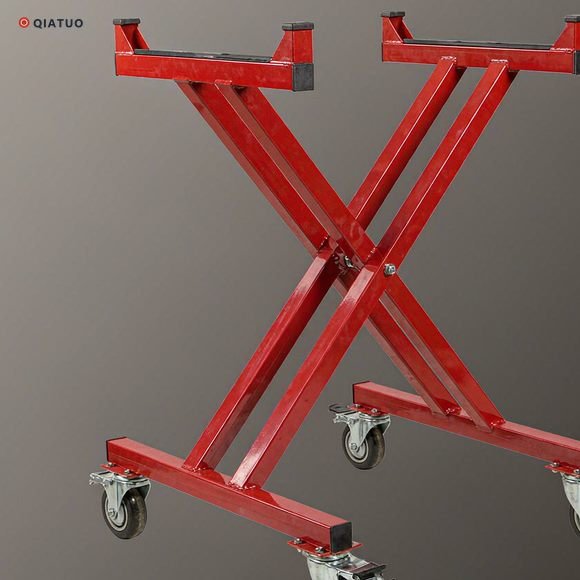
The rolling stand is what turns a good rehearsal drum into a practical one. It is an X-frame folding stand in red lacquered steel — the same profile Chinese drummers have used for generations — fitted with swivel casters so the drum rolls instead of being carried. The frame folds flat for storage, the feet carry anti-slip rubber rings so the drum stays planted once positioned, and the fittings are built not to rust or warp over years of hall humidity. Set up, the drum sits at about 80 cm total height, the standard seated playing height for this size family.
For troupes that share a rehearsal space, this matters more than any tone spec. The drum rolls out for the percussion block, rolls back against the wall for the scene work, and one person handles the whole move. No lifting a 40 cm barrel off a shelf, no wedging the shell against a chair.
Buffalo Hide, Two Grades
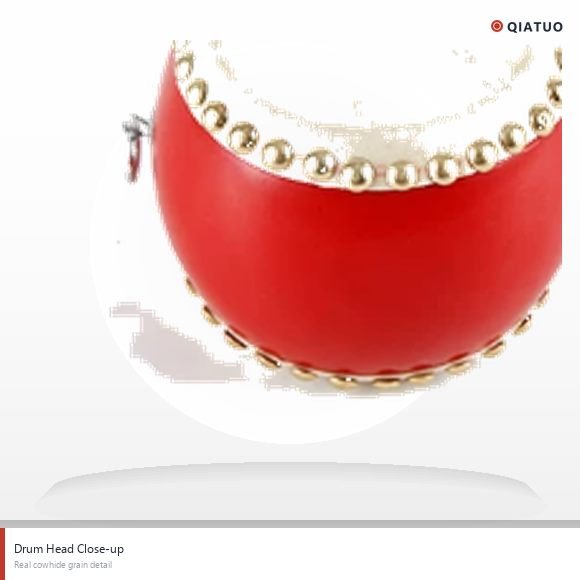
The playing surface is buffalo hide, and the line comes in two grades: first-layer hide as the high-grade option, second-layer as standard. Buffalo hide brings the warm, full tone this drum family is known for — rounder than a bright parade voice, which is exactly what a rehearsal room wants. Grain variation, light scars and color differences are characteristics of genuine hide rather than defects, and a mounted head can be re-tensioned as it settles with regular play.
The shell under the hide is paulownia — the wood used for all tanggu up to 16 inches — light enough that the drum and stand stay a one-person move, stable enough to keep its shape through seasonal humidity swings. Gold edging, round-head nails and metal hanging rings finish the shell; the nail lines run in the pattern seen across the whole tanggu line, set by hand. The same build sequence, from raw hide to a tuned drumhead, is walked through in our guide to how a Chinese drum is made.
In the Box
The 12-inch ships as a working kit: a pair of 30 cm wooden beaters matched to this size family, red silk for dressing the drum, and a video tutorial to get new players started on grip and basic strokes. A troupe that adds this drum for rehearsals does not need a separate accessories order before the first session.
Ordering for the Ensemble
STEP 1Describe the room
Rehearsal hall size, who plays, how many nights a week. A children’s folk class and an adult opera club land on different points in the size family, and saying this upfront gets the right drum on the first order instead of the second.
STEP 2Pick the style line
Plain red is the standard finish. The gold dragon line — hand-painted by experienced craftsmen — is the ceremonial option for troupes that want the rehearsal drum to double as a stage piece, and custom artwork runs through our OEM program.
STEP 3Start with one drum
Order a single drum, run a month of rehearsals on it, and check the hide, the stand hardware and the rolling action under real use. Ensembles that test one drum order the rest of the set with far fewer questions.
STEP 4Build the size ladder
Most ensembles grow downward and upward from the 12: a 10-inch for younger students, a 16 or 18-inch for the stage. Because the family shares hide and construction, a set bought over two years still plays as one section.
Frequently Asked Questions
What role does the tanggu drum play in Chinese opera?
In Chinese opera and folk ensemble work, the tanggu carries the percussion pulse that the singers and actors time their movements to. Troupes rehearse that pulse on a tanggu because it matches the stage instruments in feel and response; the 12-inch size keeps rehearsal volume manageable in a shared room while the full-size drums handle the stage.
Is a 12-inch tanggu loud enough for outdoor performances?
The 12-inch is a rehearsal and indoor drum by design. For outdoor stages and processions, the same line steps up to 16, 18 and 24 inches, where the bigger head moves the air an open space demands — same hide and build, more carrying power.
What comes with the drum when it ships?
A pair of 30 cm wooden beaters sized for the 12-to-14-inch family, red silk, and a video tutorial covering grip and basic strokes. The folding rolling stand ships with the drum as part of the setup.
Talk to the Workshop
Tell us the ensemble, the room and the rehearsal schedule, and we will match the size and hide grade to how the drum will actually be used — send the ensemble details here and start with a single drum before you outfit the whole section.