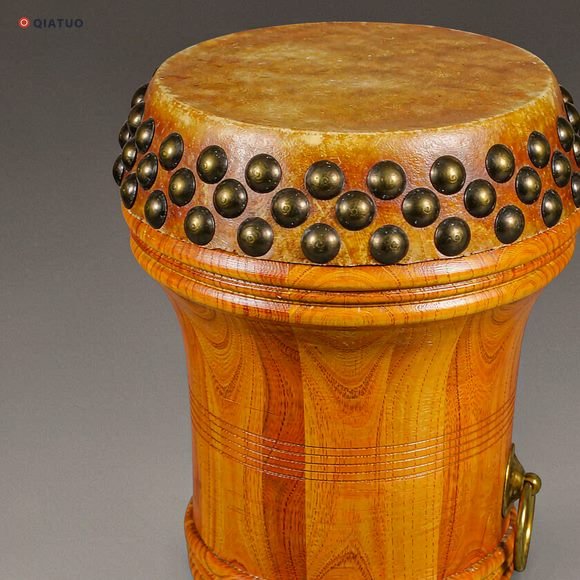
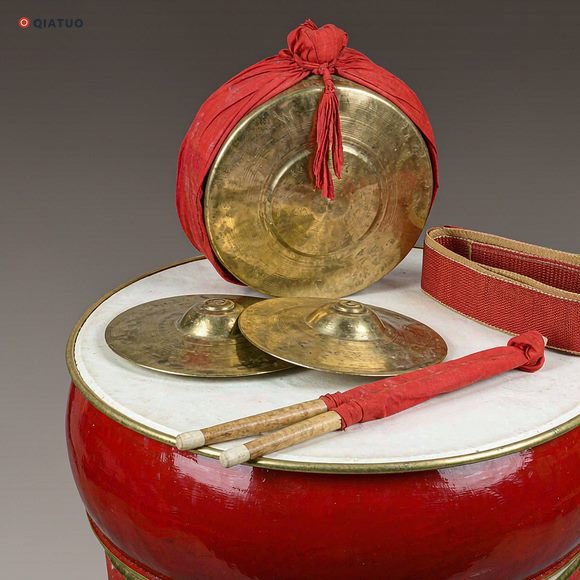
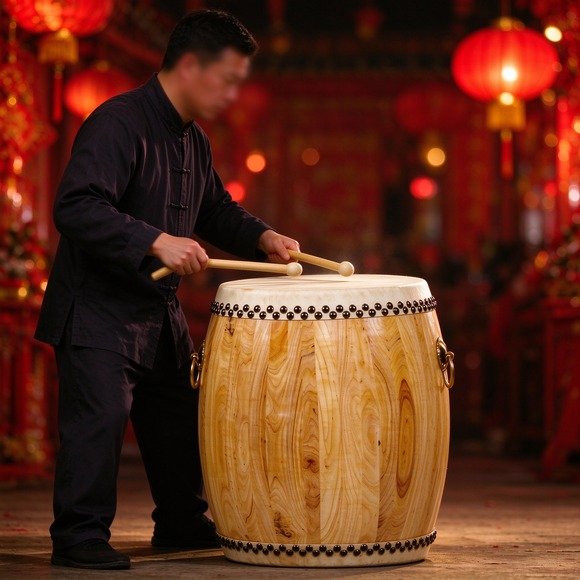
A 16-inch Chinese flat drum with steel stand is the street-ready drum for village fairs and outdoor shows: a wide 52 cm head on a shallow 25 cm toon-wood body, sun-seasoned yellow cowhide, and a steel stand that sets up on cobblestones or a market square as easily as on a stage. It is built to be seen and heard from across a fairground.
Street performers and village fair acts share a hard requirement: the instrument has to carry over crowd noise, set up fast, and move between venues without a crew. A tall barrel drum projects but is slow to relocate; a small practice drum moves easily but disappears in an open square. The flat drum sits in between — a big, shallow head that throws sound outward across a crowd, on a body light enough for one person to carry and re-set between acts. Every drum is made by hand in the Matun drum village, where the flat drum line covers the 16 and 18-inch sizes.
The 16-Inch at a Glance
| Spec | What the performer gets |
|---|---|
| Size | 16 in — 52 cm head diameter, 25 cm body depth |
| Shell | Chinese toon wood, natural or red lacquer finish |
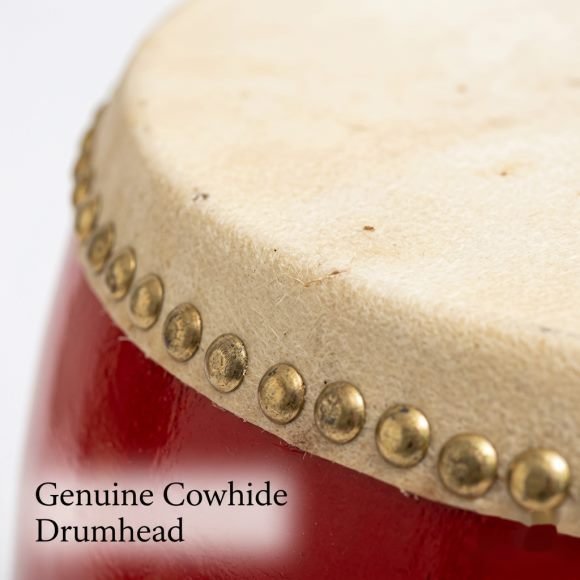
| Drumhead | Full-grain yellow cowhide (Chinese yellow cattle hide), sun-seasoned |
| Tension | Metal rod and bolt system, copper-wrapped rivets |
| Stand | Steel stand, sets up at playing height |
| Best for | Village fairs, street shows, market squares, outdoor stages |
What Makes a Flat Drum Different
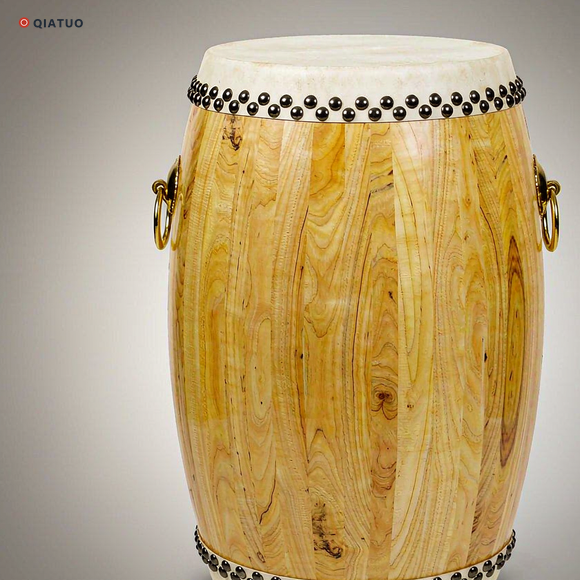
Shape is the whole difference. A standing war drum is a deep barrel that pushes sound forward in a focused beam — great for a line on a field, less ideal when the audience is spread around you. A flat drum is wide and shallow: the 52 cm head with only 25 cm of body depth spreads the tone outward in a broad arc, which is exactly what a street performer facing a crowd on three sides needs. The shallower body also keeps the pitch quick and articulate, so rhythmic patterns stay clear even in open, echo-free spaces.
There is a weight argument too. The flat profile means less shell material to carry between sets and a lower center of gravity on the stand — the drum is harder to knock over in a busy market and faster to move when the act changes location. For anyone working a circuit of fairs and street stages over a season, those minutes add up, and the lighter flat drum is the one a performer reaches for when the schedule is tight and the load-out has to be quick.
Toon Shell and Sun-Seasoned Yellow Cowhide
The body is Chinese toon wood — the same shell wood used across the war drum family — finished in natural grain or red lacquer. Toon is light for its size and stable through the humidity swings of outdoor work, which matters for an instrument that lives in a van and plays in the open air. The playing surface is full-grain yellow cowhide, genuine Chinese yellow cattle hide, cured the traditional way in open sun before mounting. Sun-seasoning settles the grain and gives the flat drum the warm, hard-wearing voice that carries over a crowd without going harsh.
The rod-and-bolt tension system around the shell lets a performer bring the head back to pitch between shows without a workshop, and the copper-wrapped rivets hold the hardware together through repeated setup and teardown. Natural grain variation and light marks on the hide are signs of genuine material, not defects. The full making process, from raw hide to a finished head, is shown in our making-process guide.
The Paint-Your-Own Option
The flat drum also comes as an unfinished white blank — a sanded toon body with a rawhide head, ready for a performer or a school group to paint their own design. This is the drum for community art projects, festival drums that carry a local motif, or team-building groups that want to decorate their own instrument before playing it. The blank is a finished, playable drum underneath; the painting is the customer’s stage. If you want a specific shell design produced for you rather than painted on site, our custom shell program handles that.
On the Steel Stand at the Fair
The steel stand is what makes the flat drum a street instrument rather than a studio one. It holds the drum at playing height on uneven ground, sets up in the time it takes to unload a van, and takes the repeated assembly of a fair season without working loose. Because the flat drum carries its weight low, the rig stays planted where a taller barrel drum might tip in a crowd.
For the working performer this is the difference between a five-minute setup and a fifteen-minute one — and at a village fair, where slots are short and the crowd moves on, setup time is performance time.
Ordering for the Street
STEP 1Describe the venue
Fair, market square, street corner or stage — and whether the audience surrounds you or sits in front. This decides how much projection the drum needs and whether the flat profile is the right voice for the room.
STEP 2Choose finish or blank
Natural toon or red lacquer for a ready-to-play drum; the white blank if you want to paint your own. Both share the same shell, hide and tension build.
STEP 3Start with one drum
Play a fair season on a single drum and check the hide, the rod tension and the stand hardware under real moving-and-performing use before you buy the rest of the act’s rig.
STEP 4Build the set
Add the 18-inch flat drum for more projection or the standing war drums for a full line — the family shares hide and build, so a mixed set still plays as one voice.
Frequently Asked Questions
What is the difference between a standing drum and a flat drum?
A standing drum is a deep barrel that throws sound forward in a focused beam, suited to a line facing one direction. A flat drum is wide and shallow — a big head on a short body — that spreads tone outward across a crowd and stays quick and articulate. Street performers and fair acts pick the flat drum because the sound reaches people on all sides and the lighter body moves easily between venues.
Can I paint my own flat drum?
Yes. The flat drum is available as an unfinished white blank — a sanded toon body with a rawhide head that is fully playable and ready for you to paint. It is a common pick for community art projects, festival drums with a local motif and team-building groups that want to decorate their own instrument.
Is a 16-inch flat drum loud enough for an outdoor village fair?
The 16-inch with its 52 cm head is built for exactly this: it moves enough air to carry across a market square while staying articulate for rhythmic patterns. For larger open grounds or a full performance line, the 18-inch flat drum and the standing war drums add projection.
Talk to the Workshop
Tell us where you perform — fairs, street stages or markets — and whether you want a finished drum or a paint-your-own blank, and we will match the size and setup to your act — send your performance details here.