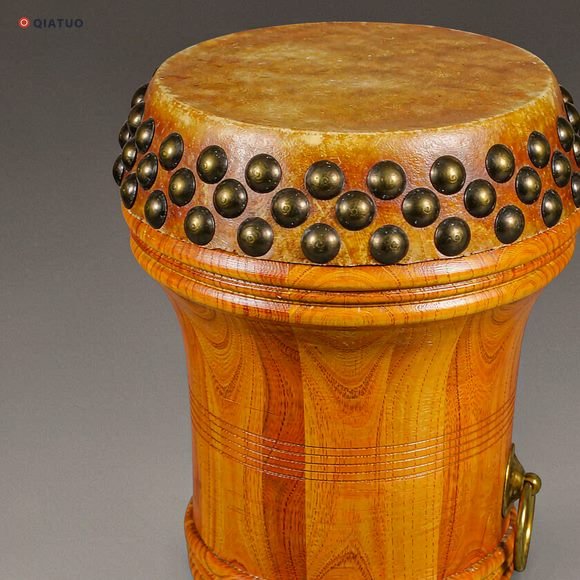
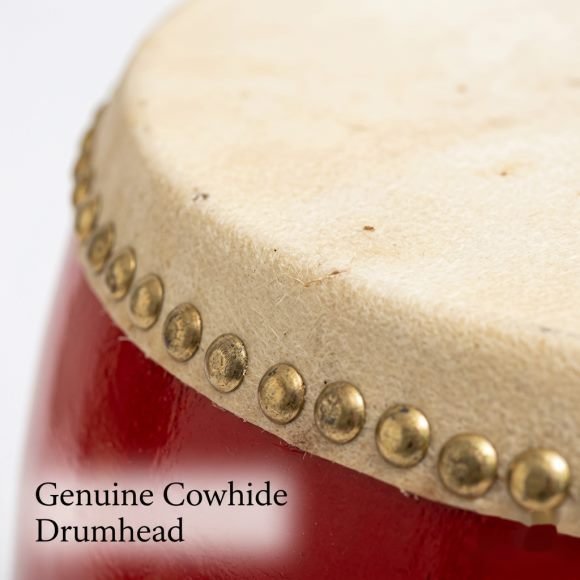
A 16-inch lion dance practice drum is the first drum most kung fu schools order: 16 inches across (about 41 cm), a deep barrel body, natural cowhide on both faces, and four rows of round-head nails locking the hide to the shell. It sits in the middle of the lion dance size range — deep enough to carry a training hall, simple enough for students to move from the practice floor to the stage.
Lion dance and kung fu share the same doorway. In most overseas schools the drum line is taught in the same room as the forms: students learn stances, then footwork, then the beat that drives the lion. Before a school buys a lion head or a full performance rig, it buys a practice drum — and the questions are always the same: is the head real hide, how is it fixed, and will it still hold tone after a year of classes. This guide answers those for the 16-inch size, the one most schools start with. QiaTuo drums are handcrafted in Matun Village, the workshop cluster where most of China’s drums are made, and every drum here comes off those same benches.
Quick Look: 16-Inch Practice Drum Specs
| Spec | What the school gets |
|---|---|
| Diameter | 16 in (about 41 cm), deep barrel body |
| Drumhead | Natural cowhide, both faces |
| Shell | Solid wood, red lacquer as standard |
| Head fixing | Four rows of round-head nails |
| Size family | 12, 14, 16, 18, 21 and 24 inches |
| Included | A pair of wooden beaters |
| First use | Class practice, gradings, school shows |
Why Schools Start at 16 Inches
Size decides how a drum teaches. Smaller heads sit higher in pitch and answer quickly under a beginner’s uneven stroke; larger heads go deeper and carry further into open air. The lion dance range runs 12 to 24 inches, and schools tend to move through it in three stages:
- 12 to 14 inches (about 30 to 36 cm) — children’s classes and small rooms. Manageable enough that a young student can set the drum up and put it away without help.
- 16 inches (about 41 cm) — the practice standard. Deep enough for a real lion dance tone, compact enough to live in a training hall and travel to a grading or a community show. This is the size most schools order first.
- 18 to 24 inches (about 46 to 61 cm) — performance work. The 21- and 24-inch drums (about 52 and 61 cm across) are what troupes perform on, with the deeper tone that reaches the back of a crowd outdoors.
Industry counts put the number of martial arts schools in the United States at about 72,000 (IBISWorld), and lion dance training sits in the schedule of a large share of them. A first drum has to survive that many beginner hands before anything else about it matters. One 16-inch drum covers the first year of training: timing drills, basic strokes, the school’s first public show. When the team grows into bigger bookings, the same school comes back for an 18 or a 21 — which is why the size family matters more than any single drum.
What Goes Into the Drum
HEADNatural cowhide on both faces
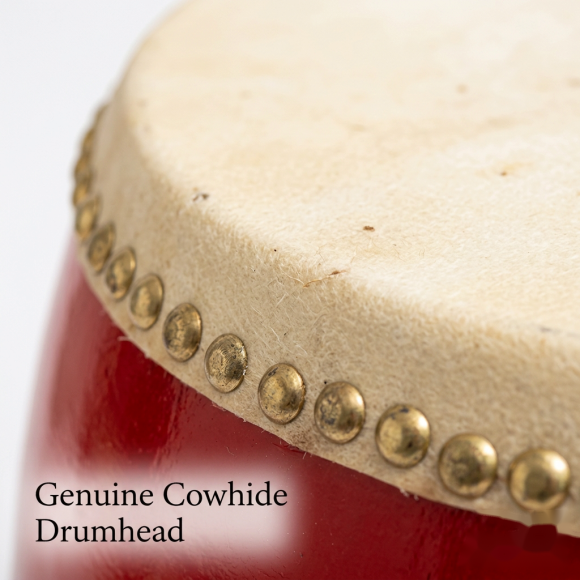
Both faces take natural cowhide, so the drum answers the same way from either side — which matters when two students trade rounds across it. A practice drum gets hit hard and unevenly for an hour a night, and natural hide takes that schedule: it can be re-tensioned as it settles, and grain variation, light scars and color differences are characteristics of genuine hide, not flaws. Heads go on damp and dry under tension, then get tuned by ear at the bench — the same sequence walked step by step in our guide to how a Chinese drum is made.
SHELLDeep barrel, solid wood
The deep body is the lion dance drum’s signature. It gives the head more air to move and the tone enough weight to hold the room when a class of beginners plays at full swing. The shell is solid wood finished in red lacquer as standard. The lacquer is protection as much as color: it seals the wood against the humidity swings a drum meets between an air-conditioned studio and an outdoor stage.
NAILSFour rows that hold the tension
The hide is fixed under four rows of round-head nails — the pattern you see on professional lion dance drums. Nailing is set by hand: rows spaced too tight bite the skin, too far apart and the edge lifts as the hide dries. Straight, evenly spaced rows are also the first thing to inspect in a photo, because they tell you the drum was finished by someone who expected it to be looked at.
FINISHRed as standard, your school’s identity on request
Red is the standard finish, the color schools and associations recognize on sight. Black and custom colors, school names and logo work run through our OEM program, which covers shell size, hide selection, finish and packing — settled together with the size choice so a whole class orders as one.
More Than One Drum: The Working Setup
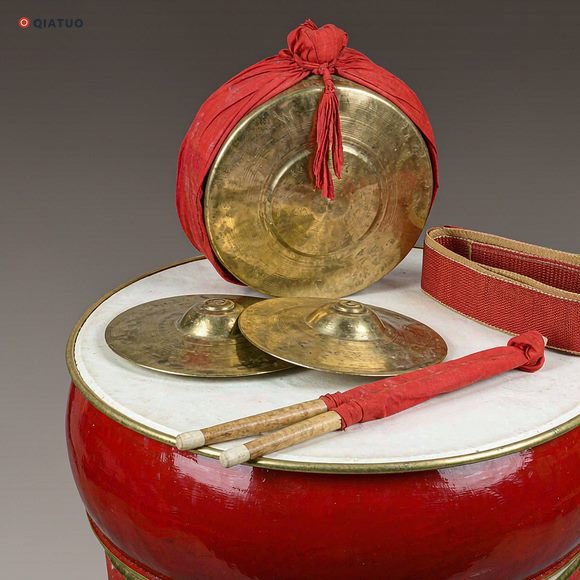
A working lion dance line is never a single drum. The form runs on call and answer: the drum holds the pulse, a gong and a pair of copper cymbals answer it, and the cymbals’ working range — 16 to 20 inches — sits right next to the 16-inch drum in a school’s first order. Schools usually add the gong and cymbals with their first show date booked, then grow into an 18- or 21-inch drum once the team outgrows the practice floor. Buying the pieces from one bench keeps the hide, the nail method and the finish matching across the set.
Ordering the First Batch
STEP 1Tell us the class
Student age, room size, how many drums need to be on the floor at once. A children’s class and an adult performance team do not need the same size, and saying that upfront saves a round of back-and-forth before anyone quotes anything.
STEP 2Choose finish and identity
Red is standard. If the school wants its own colors, its name or its logo on the shell or the head, that work runs through the OEM program with the size and hide choices settled at the same time.
STEP 3Start with a sample
Order one drum first. Check the head tension at the center and near the rim, the nail rows under a light, the finish up close, and how the drum takes a month of real classes. Schools that check a sample keep it as the class loaner once the full order lands.
STEP 4Grow the set as the team grows
Second orders usually follow the performance calendar: gong and cymbals when the first show is booked, an 18 or a 21 when students outgrow the 16. Because the sizes share the same head and nail method, a set bought a year apart still matches on the floor.
Frequently Asked Questions
What size lion dance drum should a kung fu school buy first?
A 16 inch lion dance drum (about 41 cm across) suits most first orders: deep enough for a real lion dance tone, manageable for students to move and set up themselves. Children’s classes often start at 12 to 14 inches, and schools that perform publicly usually add an 18- to 21-inch drum later.
Is the drumhead made of genuine cowhide?
Yes — both faces use natural cowhide. Grain variation, light scars and color differences are characteristics of genuine hide rather than defects, and a mounted head can be re-tensioned as it settles with regular use.
What comes with the drum, and what else does a school need?
A pair of wooden beaters ships with the drum. A working lion dance setup adds a gong and a pair of copper cymbals in the 16- to 20-inch range, and all of it can be ordered together in one shipment.
Ordering From the Bench That Makes Them
Most schools come to us with a size in mind and questions about the rest. Tell us the class size, the age group, and how the drum will be used, and we will come back with hide and finish options for the first order — or send a sample first and check it against this guide at your own bench.