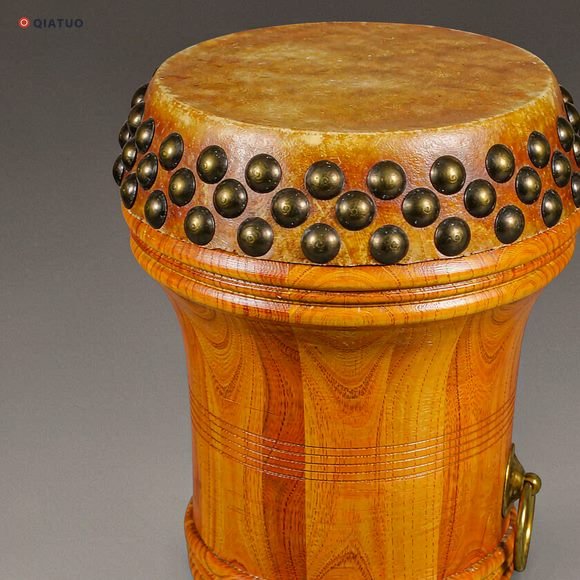
A 24-inch lion dance drum is the drum a parade troupe reaches for when the route goes outdoors: a head about 61 cm across, a deep barrel body, natural cowhide on both faces, and four rows of round-head nails holding the hide to the shell. It is the largest size most troupes order, and the one that carries the beat over a crowd without a speaker in sight. Red lacquer comes as standard — and the shell can be painted to your team colors.
Parade work is the hardest test a drum gets. The drummer plays standing, in motion, often for blocks at a time, and the sound has to reach spectators who are hearing traffic, laughter and five other things at once. That is a job for a big head and a deep body, not for a louder stick. QiaTuo builds every drum by hand in Matun Village, the workshop cluster where most of China’s drums are made, and the 24-inch lion dance drum is the top of that bench’s range.
The 24-Inch at a Glance
| Spec | What the troupe gets |
|---|---|
| Diameter | 24 in (about 61 cm), deep barrel body |
| Drumhead | Natural cowhide, both faces |
| Shell | Solid wood, red lacquer standard, custom colors on request |
| Head fixing | Four rows of round-head nails |
| Size family | 12, 14, 16, 18, 21 and 24 inches |
| Included | A pair of wooden beaters |
| Best for | Parades, festival mains, outdoor routes |
Why Parade Troupes Go Bigger
The lion dance range runs from 12 to 24 inches, and each step up buys volume and depth before it buys anything else. The small and middle sizes — 12 to 16 inches — are practice and hall drums: quick to answer, easy to position, ideal for teaching. Take the same playing out onto a street and the math changes. A drumhead roughly 61 cm across moves enough air to cut through an open-air crowd, and the deep barrel gives the beat the weight that makes banners shake and spectators turn around.
That is why troupes tend to run two tiers. Practice and indoor shows happen on a 16-inch drum; the 24-inch comes out for parades, festival mains and anywhere the audience stands far from the drum line. Troupe members who train on the smaller size step up to the big drum without relearning anything — same hide, same nailing, same response, just more of it. The big head also forgives the realities of a long route: drummers rotate, arms tire on the second kilometer, and a drum that answers a lighter stroke still keeps the line’s pulse steady.
Where the Deep Tone Comes From
The low, carrying voice of a 24-inch drum is built, not bought. Three things do the work:
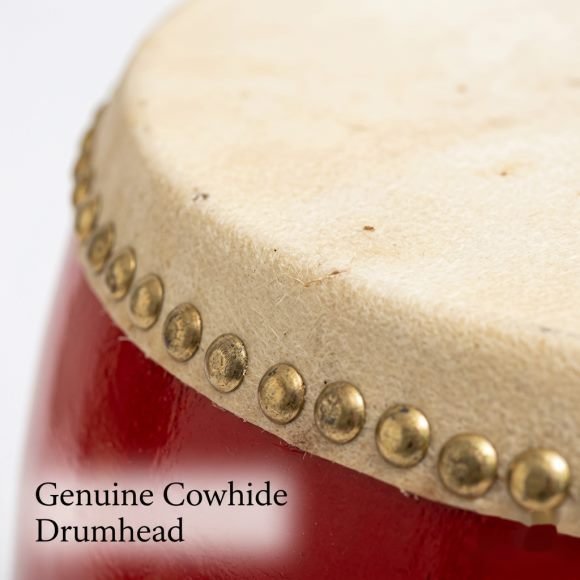
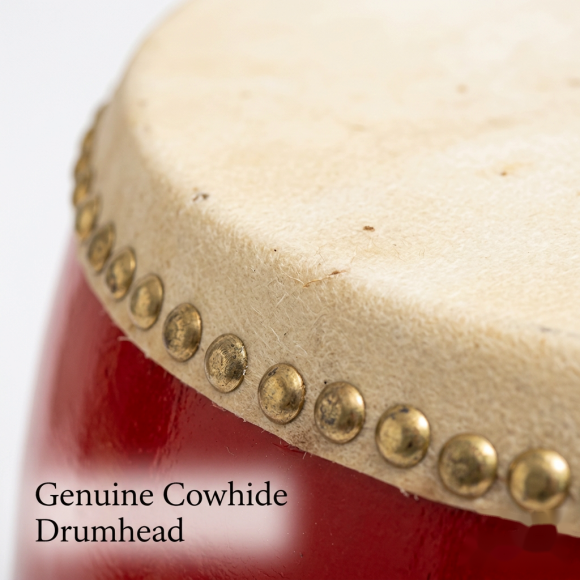
- A thick natural hide. Both faces use natural cowhide, and on a head this wide the hide’s own weight adds body to every stroke. Grain variation, light scars and color differences are characteristics of genuine hide rather than flaws — and because the head is real hide, it can be re-tensioned as it settles with use.
- A deep barrel. The tall body gives the head a large air column to move, which is where the low end lives. This is the difference between a drum that is heard near the drum line and one that is heard down the route.
- Four rows of round-head nails. The hide is fixed under four rows — the pattern seen on professional lion dance drums — set by hand so tension sits level all the way around. Level tension is what keeps the tone even when a full parade’s worth of strokes has landed on the skin. The same sequence, from damp hide to tuned head, is walked through in our guide to how a Chinese drum is made.
Painted to Your Team Colors
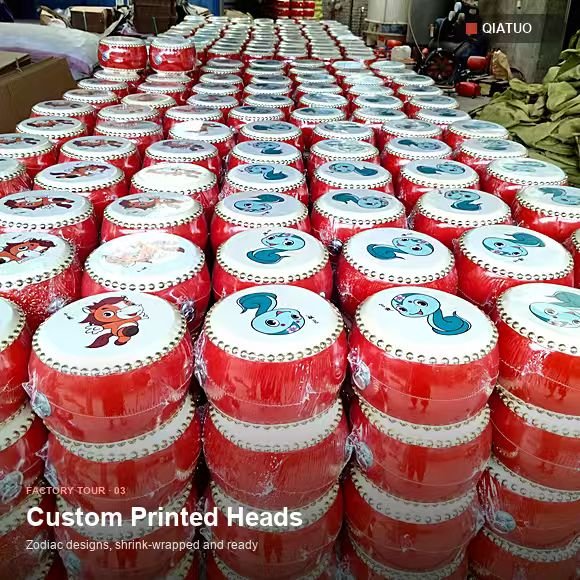
On a parade route, the drum is part of the costume. It marches in photos, it stands in front of the banner, and it should look like it belongs to your troupe. Red is the standard finish — the color most associations recognize on sight — but the shell can be finished in your team colors, and troupe names and logo work run through our OEM program. Size, hide selection, finish and packing are settled together, so a whole drum line orders as one and arrives looking like one set. For a troupe that books weddings, new year routes and shop openings, a drum that carries the team identity is working gear, not decoration.
The Parade Line Around the Drum
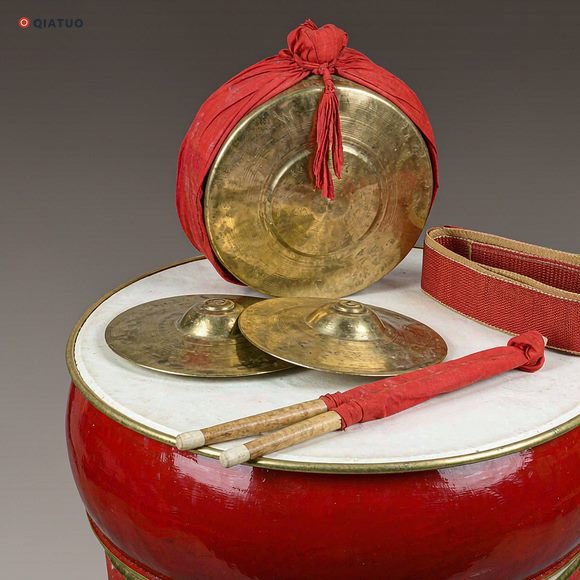
A parade drum line is a small ensemble: the drum holds the pulse, a gong answers it, and a pair of copper cymbals — the working range is 16 to 20 inches — cuts through on the accents. Troupes usually add the gong and cymbals from the same bench so the set matches in finish and hardware. The lacquered shell earns its keep on the road: sealed wood shrugs off the humidity swings between a morning staging area and an afternoon route, and the finish wipes clean after a dusty day.
Ordering a 24-Inch for Your Troupe
STEP 1Tell us about the route
Indoor stage, outdoor parade, or both? How far does the drum travel, and how many performances a season? A troupe that plays long outdoor routes has different priorities from one that mainly does banquet shows, and saying that upfront gets you the right size and finish the first time. If your route runs in wet-season months, mention that too — it affects how we pack the drum for shipping.
STEP 2Decide the look
Standard red, team colors, troupe name on the shell — the paint decision goes through the OEM program together with size and hide, before anything is built. That ordering keeps the finish consistent with the rest of the team’s gear.
STEP 3Check a sample first
Many troupes order one drum, play a full event on it, then commit to the rest of the line. Look at the nail rows under a light, check the tension at the center and near the rim, and put the drum through a real route before the full order.
STEP 4Build out the line
Second orders usually add the gong and cymbals, then a 16-inch drum for practice and indoor bookings. Because every size shares the same hide and nailing method, the set keeps matching as it grows.
Frequently Asked Questions
Is a 24-inch lion dance drum too large for student players?
A 24 inch lion dance drum (about 61 cm across) is the troupe’s performance drum, played by trained members, and schools usually start students on a 16-inch instead. The large head is exactly what carries the beat along a parade route, and players who learned on a smaller drum adapt quickly because the hide, nailing and response are the same.
Can we order the drum in our team colors with our troupe name?
Yes. Red is standard, and custom shell colors, troupe names and logo work run through the OEM program — settled together with the size and hide choices so the whole drum line arrives as one matching set.
How does the cowhide head hold up to outdoor parade work?
Both faces use natural cowhide, and grain variation, light scars and color differences are characteristics of genuine hide rather than defects. A mounted head can be re-tensioned as it settles with regular play, and the lacquered wood shell is sealed against humidity — the mix of conditions a parade day throws at a drum.
Talk to the Bench That Builds Them
Tell us the route, the season’s bookings and the look you want, and we will come back with size, hide and finish options for the first order — start the conversation here, or send a sample request and test the drum against your own route before you commit the whole line.