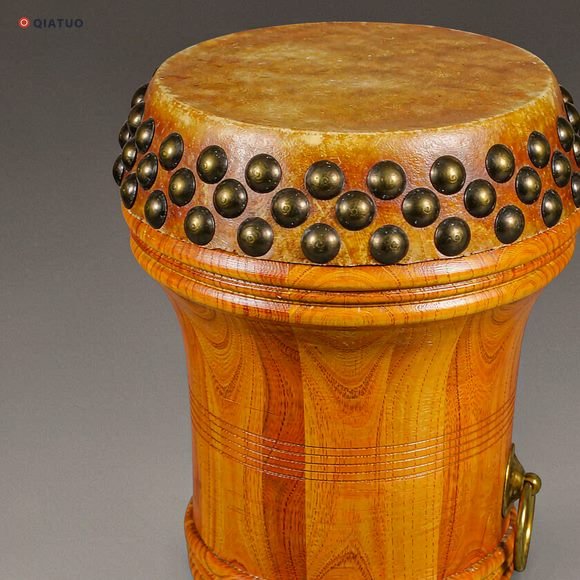
The name is the brief. Tanggu literally means “hall drum”: the drum built to live in ceremonial halls, community stages and the rooms where a group gathers to mark an occasion. The 24-inch tanggu drum with yang wood shell is the hall size of the family: an 80 cm head on a 60 cm deep shell, first-layer buffalo hide as the high-grade playing surface, and the depth of tone that a big room asks for.
Where the 12-inch rehearsal drum keeps its volume polite, the 24-inch does the opposite job — it fills the hall. This is the size community groups reach for when the ceremony needs to be heard from the back wall without amplification: opening rites, festival stages, hall dedications, the drum that announces the moment has started. It is handmade in the drum-making village of Matun, where the whole size ladder from 7 inches to 2 meters comes off the same benches.
The 24-Inch at a Glance
| Spec | What the hall gets |
|---|---|
| Size | 24 in — 80 cm head diameter, 60 cm body depth |
| Shell | Poplar wood, red lacquer |
| Drumhead | First-layer buffalo hide (high grade), or second-layer (standard) |
| Trim | Gold edging, round-head nails, metal hanging rings |
| Stand | X-frame folding stand, about 85 cm total height |
| Style lines | Plain red, or hand-painted gold dragon |
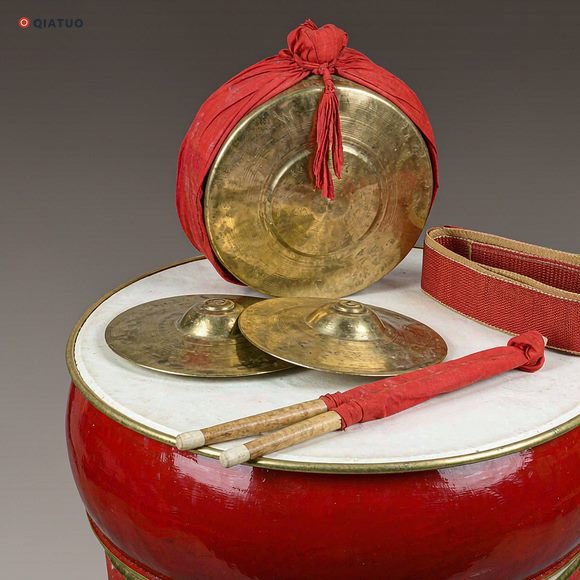
| Beaters | Large 36 cm beaters, matched to this size |
Yang Wood Above 18 Inches: the Shell Rule

Every tanggu up to 16 inches — the 12-inch rehearsal drum included — gets a paulownia shell. From 18 inches up, including this 24-inch, the family switches to yang wood (poplar). It is the workshop rule that has held across the whole range, and buyers building a mixed set should know it: a 12 and a 24 are not the same shell wood, even though they share hide, trim and build.
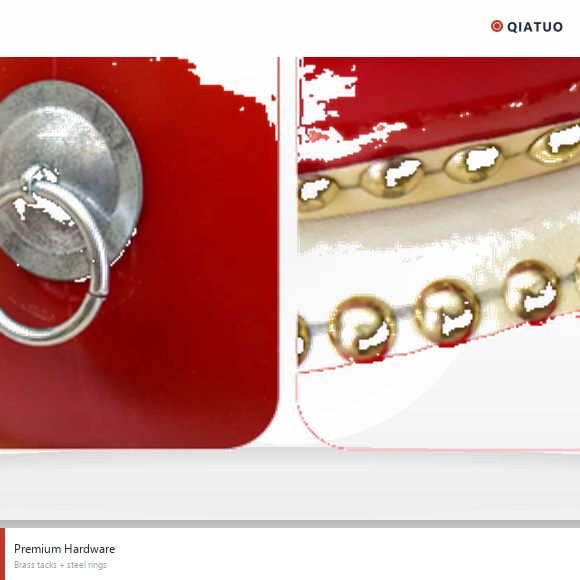
What the shell does for the hall is physical. The 24-inch body is hollowed from solid wood and lacquered in the classic red, and the 60 cm depth gives the air inside the drum room to move — which is where the deep, carrying tone of this size comes from. Gold edging, round-head nails set in the line’s standard pattern, metal hanging rings and heavy-duty steel rings finish the shell. The same hollowed-shell starting point is shown step by step in our making-process guide.
First-Layer Hide: What the Upgrade Buys
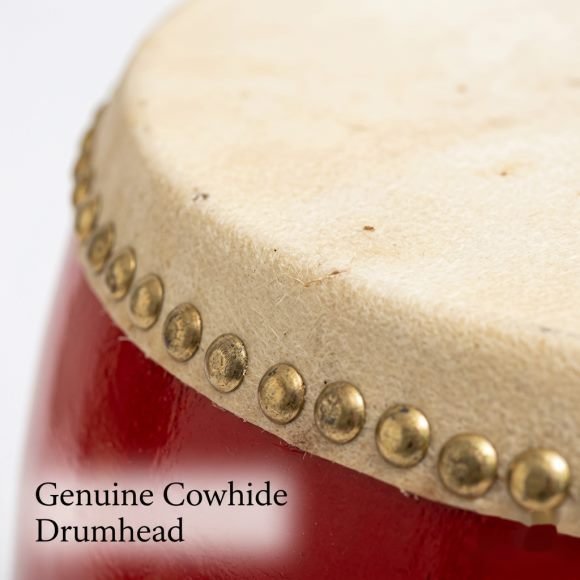
Buffalo hide comes in two grades on this line. First-layer hide — the high-grade option — is the full thickness of the hide’s outer face: it takes tension evenly, holds its pitch longer between tunings, and gives the 24-inch its roundest low end. Second-layer hide is the standard grade: same family tone, friendlier budget, the common pick for schools and groups buying several drums at once.
On a hall drum, the head grade matters more than on a rehearsal drum, because the 24-inch is heard rather than practiced on. Natural grain variation, light scars and color differences across the head are marks of genuine hide, not defects, and a mounted head can be re-tensioned as it settles. For halls that want the ceremonial look to match the sound, the gold dragon line — hand-painted by experienced craftsmen — runs through our custom shell work.
What the Hall Hires This Drum For
A ceremonial hall drum has one job description, and it is written into the room: be heard. The 24-inch is the drum that opens the occasion — the stroke that tells a hall the ceremony has started — and then holds the beat the rest of the program moves to. No amplification, no microphone stands, just a big head on a deep shell doing the work halls have always hired drums to do. That is why the size sits where it does: the 18-inch covers a meeting room, the 24-inch covers a hall, and the meter-long ceremonial drums cover a full stage. Groups stepping up from a rehearsal drum feel the difference in the first five minutes — the sound arrives at the back wall instead of stopping halfway. For a drum with a brief like this, head grade and shell build are not spec-sheet details; they are the whole assignment.
The Stand at 85 cm
The 24-inch sits on the same X-frame folding stand family as the rest of the tanggu line, but taller: about 85 cm total height, versus 80 cm for the 12-to-20-inch sizes. That height is the difference between a drummer reaching down at a student drum and standing into a hall drum with full stroke weight — exactly what a ceremonial piece needs.
The stand folds flat between events, carries anti-slip rubber feet so the drum stays planted once set, and uses fittings built not to rust or warp in hall storage. Caster versions of the stand family roll the drum from the storage room to the floor; tell us which way the hall works and we will match the build.
Ordering for the Hall
STEP 1Describe the occasion
Hall size, ceremony type, how often the drum plays. A drum that opens a monthly ceremony and a drum that anchors weekly festival rehearsals get matched differently — hide grade first, size second.
STEP 2Choose the hide grade
First-layer for the piece that represents the group; second-layer for sets and training drums. Many halls order both: one first-layer drum front and center, standard-grade drums behind it. If the drum plays weekly rather than once a season, the first-layer grade pays for itself in tuning stability alone.
STEP 3Pick the finish
Plain red is the standard. The hand-painted gold dragon line turns the drum into a stage piece in its own right, and custom shell painting is available for halls that want their own mark on the drum.
STEP 4Build around the 24
Groups that start with the 24-inch usually grow the ladder next: an 18-inch for smaller rooms, a meter-long ceremonial drum for the biggest stages. Same hide, same trim, same playing feel across the set.
Frequently Asked Questions
How do you produce the deep sound on a tanggu drum?
Deep tone on a tanggu comes from three places: the head grade, the shell depth and the stroke. A first-layer buffalo head on the 60 cm deep 24-inch shell gives the roundest low end, and weight into the center of the head brings it out — strokes nearer the edge answer faster and brighter. Keeping the head at playing tension as it settles preserves the depth over time.
How big are orchestral tanggu drums?
Ensemble and hall tanggu drums typically run from about 12 to 24 inches for working sets, with ceremonial pieces going larger — our line reaches 2 meters. The 24-inch is the common hall anchor: big enough to carry a room, still movable on its folding stand.
What is the difference between first-layer and second-layer buffalo hide?
First-layer hide is the outer face of the hide: thicker grain, even tension, longer pitch hold — the high-grade head. Second-layer is the standard grade with the same family tone at a friendlier budget. Both are genuine buffalo hide and both can be re-tensioned as the drum is played.
Talk to the Workshop
Tell us the hall, the occasion and how often the drum will play, and we will match the hide grade and stand build to the room — send the hall details here and start with the drum the ceremony actually needs.